How to Escape Back Control in BJJ: Hand Fighting, Hook Management, and 3 Reliable Exits
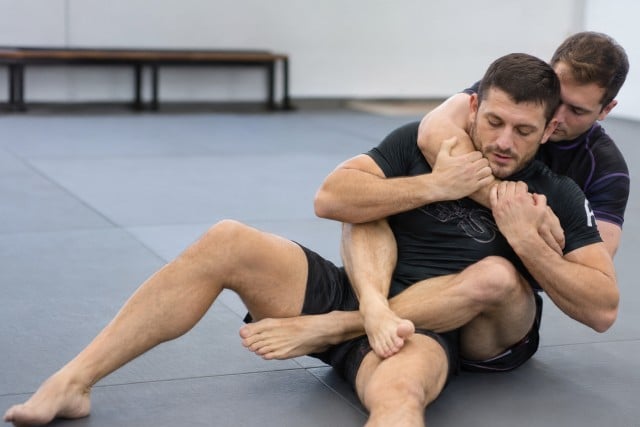
Back control is one of the strongest positions in Brazilian Jiu-Jitsu for a reason. Your opponent is behind you, your hips are exposed, and the choke threat forces bad reactions. But even though it is a dominant position, it is not magic. If you understand what to protect first and what battle matters most, you can escape back control much more consistently.
In this guide, you will learn how to escape back control in BJJ using a simple framework: protect your neck, win the hand fight, manage the hooks, and turn to the safe side. If you are still building your overall foundation, our step-by-step guide to learning BJJ is a useful companion.
What matters most when escaping back control
Most beginners try to explode out of back control before they have addressed the real danger. That usually makes things worse. Before you think about rolling, bridging, or spinning, you need to solve these problems in order:
- Protect your neck first. Two hands on the choking arm is usually the safest starting point.
- Get your shoulders to the mat if possible. The more your opponent keeps you upright, the easier it is for them to attack the choke.
- Manage the bottom hook. In many escapes, the bottom hook is the one that stops you from turning in.
- Turn to the safe side. In standard back control, that usually means turning toward the side of the choking arm so you do not expose your back again.
If that order feels familiar, it is because the best escapes in BJJ usually start with survival before movement. The same principle shows up in our guide to the best BJJ instructionals for escapes and survival.
Your first job: win the hand fight
If your opponent has a seatbelt, the top arm is the biggest threat because it can become the choking arm. Before you try to escape your hips, use both hands to control that arm. A common goal is to grab at the wrist and forearm together so you can keep the hand from sliding across your neck.
Good hand-fighting cues:
- Keep your chin tucked, but do not rely on chin defense alone.
- Pin the choking-side wrist to your chest when possible.
- Hide your neck by shrugging your shoulders slightly and staying compact.
- Keep your elbows tight so your opponent cannot easily open space.
The point is not to freeze. The point is to buy enough safety to start changing the angle of your body.
Escape 1: Get your back to the mat and slide to the safe side
This is the first escape many beginners should learn because it teaches the right priorities. Once you have two hands controlling the choking arm, start falling to the safe side instead of staying upright. In most cases, that means moving your shoulders toward the mat on the same side as the choking arm.
How to do it
- Control the choking arm with two hands.
- Move your shoulders toward the mat on the safe side.
- Keep your head tight and avoid letting the choking elbow slide under your chin.
- As you land, begin clearing the lower hook with your hips and feet.
- Turn in and face your opponent, ideally arriving in top half guard or a neutral top position.
Why it works: once your back is no longer exposed in a seated posture, your opponent loses some of the angle they need for strong choking attacks. You are also in a better position to start peeling hooks and rotating in.
Common mistake: falling to the wrong side. If you turn away from the choking arm, you often give your neck away or let your opponent follow you back to the other side.
Escape 2: Trap the bottom hook and turn in
When people get stuck in back control, one hook often matters more than the other. The bottom hook is usually the one blocking your rotation. If you can trap it, your turn becomes much easier.
How to do it
- Win enough of the hand fight to keep the choke from developing.
- Bring your hips down toward the mat instead of carrying your opponent’s weight high.
- Use your foot to step over or pin their bottom hook.
- Once that hook is trapped, rotate your hips and shoulders toward the safe side.
- Come up facing your opponent and settle before trying to attack.
Why it works: hooks are what let your opponent stay attached while you move. Remove the controlling hook, and their upper-body control becomes much easier to break down.
This is a good example of why positional focus helps more than random rolling. If you want a structured way to improve one defensive area at a time, see how to build a complete BJJ game using online instructionals.
Escape 3: Scoot your hips over the hook and turn into top half guard
Sometimes the cleanest finish is not a full escape straight to open space. It is enough to clear your hips past one hook and accept top half guard. That is a strong result, especially against a skilled training partner.
How to do it
- Control the choking arm and start turning to the safe side.
- Walk or scoot your hips down so your opponent slides higher on your back.
- Use your leg and hip movement to clear the lower hook line.
- Turn in hard enough to bring your chest toward your opponent.
- Settle in top half guard and flatten them before they can re-attack.
Why it works: many good escapes do not end in total freedom. They end in a better position. If you can turn a bad back-control situation into top half guard, that is a win.
What if they have a body triangle?
A body triangle changes the problem because there is no easy hook to trap. Your priorities stay mostly the same, though: protect your neck, get to the safer side, and work to put your shoulders on the mat. Turning toward the locked side is often important because it reduces their ability to stretch you out and follow your rotation.
If the squeeze is painful or you feel pressure on your ribs or lower back, stay conservative. Do not thrash wildly. In training, tap if you feel sharp pain or cannot defend intelligently.
Gi vs. no-gi differences
In no-gi, the hand fight is often faster and the choke appears with less warning. In the gi, lapels can make late defense much harder, so recognizing danger early matters even more. In both cases, the underlying escape logic stays the same:
- Protect the neck
- Control the threatening arm
- Change your angle
- Clear the controlling leg connection
- Turn in and settle
Common mistakes when escaping back control
- Trying to explode before controlling the choking arm. Movement without hand fighting usually opens the choke.
- Turning to the wrong side. This often exposes your neck even more.
- Ignoring the bottom hook. If the hook stays in place, your hips usually stay trapped.
- Accepting a panic pace. Back escapes work better when you solve one layer at a time.
- Expecting a perfect finish every time. Top half guard is often a very good outcome.
How to drill back escapes without getting overwhelmed
You do not need to start with full live back control rounds every time. Start smaller. Give the top player a seatbelt and one hook. Let the bottom player focus only on hand fighting and turning to the safe side. Then add the second hook. Then add controlled submission finishes.
If you like more game-based learning, these ecological BJJ games can help you build escape timing without turning every round into a survival test. And if you are doing extra study outside class, our guide on learning BJJ at home gives you a few practical ways to reinforce defensive mechanics between sessions.
Final thoughts
Escaping back control in BJJ gets much easier when you stop thinking of it as one big move. It is really a sequence of smaller wins: defend the neck, control the choking arm, get to the safe side, clear the hook, and turn in. That sequence will not make you escape every black belt in your gym tomorrow, but it will give you a much calmer and more reliable starting point.
If back control has been a problem for you, pick one of these escapes and stay with it for a few weeks. Repetition with a clear goal beats collecting ten different reactions you cannot yet apply under pressure.