How to Wash and Care for Your BJJ Gear
Whether rolling in a crisp white gi or repping your favorite rashguard and shorts in no-gi, your Brazilian Jiu-Jitsu gear takes a beating. Sweat, friction, blood, and mat grime all build up over time, and if you’re not careful, your gear can quickly become a breeding ground for bacteria and odor.
Proper care isn’t just about hygiene—it’s about longevity, performance, and respect for your training partners. Here’s how to keep your BJJ gear clean, fresh, and rolling-ready.
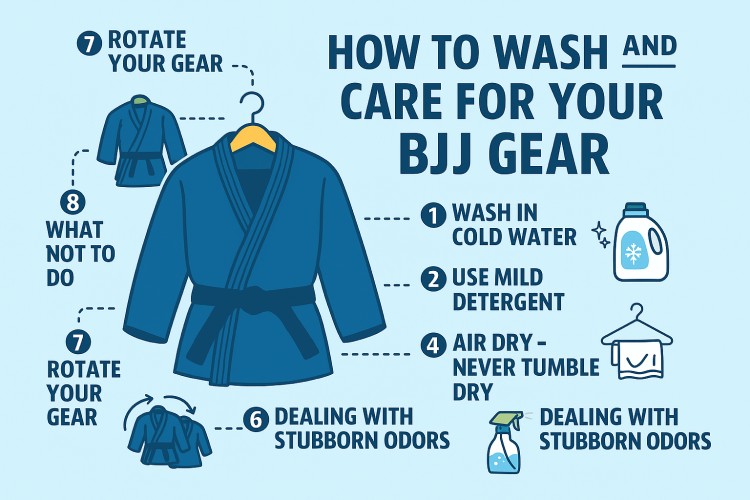
1. Wash After Every Training Session
It’s worth repeating: never reuse sweaty gear.
- Gi: Always wash your gi after every session, even if you “barely sweated.”
- Rashguards, Spats, Shorts: These synthetic fabrics trap moisture and bacteria—wash them immediately after use.
Why it matters: Not washing your gear after training can lead to ringworm, staph infections, skin rashes, and horrible mat stink.
2. Wash in Cold Water
Wash your gear with cold or lukewarm water (30°C / 86°F max).
- Hot water can shrink cotton gis and degrade the elastic in spats and rashguards.
- Cold water protects the fabric, stitching, and fit.
Pro tip: Turn rashguards and spats inside out before washing to preserve prints and compression.
3. Use Mild Detergent (and Skip Fabric Softener)
Pick a fragrance-free, sports-friendly detergent—look for options designed for moisture-wicking fabrics or athletic gear.
- Avoid fabric softeners or bleach—they break down fibers and reduce the gear’s moisture-wicking abilities.
- Add white vinegar or baking soda to your wash if odor persists for extra freshness.
4. Air Dry—Never Tumble Dry
Dry your gear by hanging it up in a well-ventilated area.
- High heat from dryers can shrink cotton, crack logos, and weaken stitching.
- Rashguards can lose elasticity if dried with heat.
Tip: Hang dry inside and out of direct sunlight to preserve color and prevent stiff fabric.
5. Deep Clean Occasionally
Every few weeks, give your gear a deeper wash:
- Soak your gi in cold water with a splash of vinegar or OxiClean for an hour before your regular wash.
- This helps remove sweat buildup and neutralize odors in the fibers.
6. Dealing With Stubborn Odors
If your gear still smells after washing:
- Try sports gear spray with antimicrobial properties.
- Store dry—not in your gym bag!
- Consider using antibacterial laundry boosters or detergent designed for combat sports.
7. Rotate Your Gear
Have at least two gis and a few sets of no-gi gear so you can alternate and avoid wearing damp or smelly gear between washes. This keeps you clean and gives your gear more time to dry fully and breathe.
8. What NOT to Do
- ❌ Don’t leave your gear in your gym bag overnight
- ❌ Don’t tumble dry unless the label says it’s OK
- ❌ Don’t use bleach or fabric softener
- ❌ Don’t iron rashguards or compression gear
9. Preventing Skin Infections: What You Need to Know
Keeping your BJJ gear clean is essential to avoiding common skin infections like ringworm, staph (including MRSA), and impetigo—all of which spread through contact with dirty mats, sweaty gear, or infected skin. To protect yourself:
- Wash all training gear immediately after each session.
- Shower within 30 minutes of training using antibacterial soap.
- Regularly clean your gym bag, water bottle, and sandals.
- Avoid sharing gear, towels, or soap with teammates.
- Inspect your skin for red spots, rashes, or unusual bumps, and stay off the mat if you suspect infection.
A clean GI doesn’t just look good—it’s your first defense against dangerous mat-born bacteria and fungi.
Bonus: Belt Care
- Yes, wash your belt. It’s fabric. It gets dirty.
- Wash it like your gi—cold water, hang dry.
- If you’re superstitious, at least rinse it occasionally. Sweat-soaked belts can harbor bacteria too.
Final Thoughts
Caring for your BJJ gear is part of the martial arts lifestyle. It shows respect for yourself, your teammates, and your academy. With consistent care, your gi will last longer, your rashguards will stay fresh, and your training partners will thank you.
A clean GI is a happy GI, and a safer mat is better.
Find your next gear with our BJJ GI brand list.
Related Reading
- The Ecological approach to learning BJJ
Learn all about this new way of learning - Learn Brazilian Jiu-Jitsu
How to learn BJJ