Triangle Choke Defense in BJJ for Beginners: Posture, Hand Position, and 3 Reliable Escapes
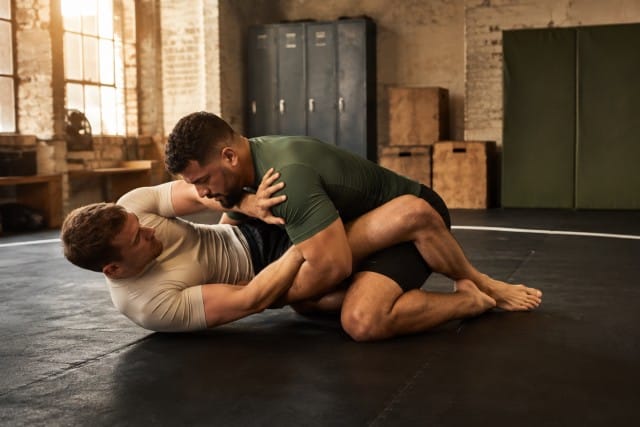
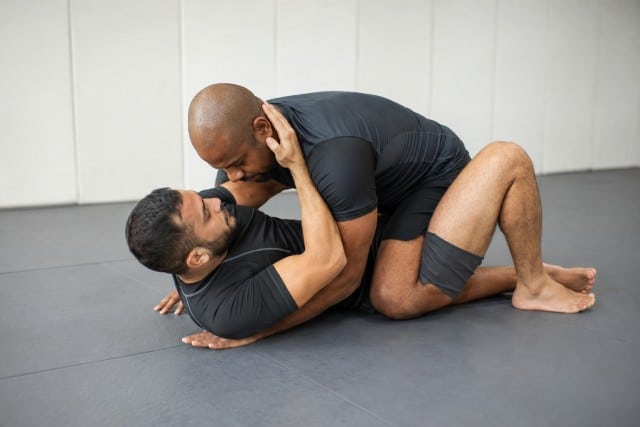
If you are new to Brazilian Jiu-Jitsu, the triangle choke can feel like it appears out of nowhere. One second you are inside closed guard, and the next your posture is broken, your arm is trapped, and your neck feels like it is disappearing. The good news is that triangle defense is not about frantic strength. It is mostly about recognizing the danger early, keeping sensible hand position, and knowing which escape makes sense for the stage you are in.
In this guide, you will learn how the triangle usually develops, what your first defensive priorities should be, and three reliable ways to escape without making the choke worse. If you are still building your overall foundation, it also helps to zoom out and focus on learning BJJ the right way so your defense improves along with the rest of your game.
Why Beginners Get Caught in Triangles So Often
The triangle usually comes from a few predictable mistakes:
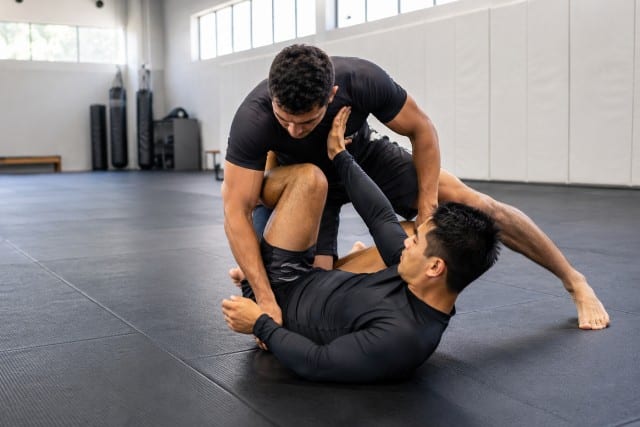
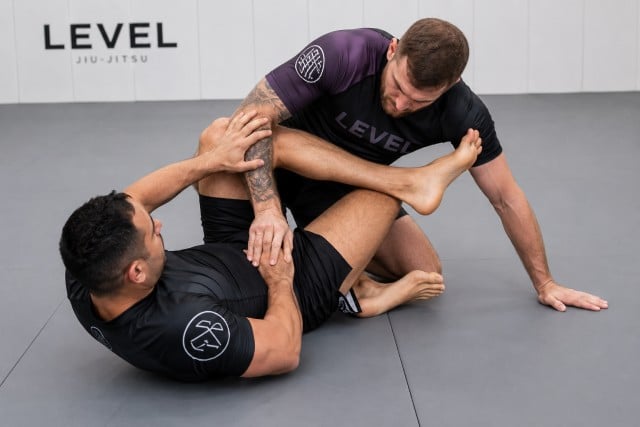
- Leaving one arm in and one arm out inside closed guard
- Letting your posture collapse forward
- Reaching too far with your hands
- Trying to yank your head free after the legs are already locked
- Driving straight forward while the bottom player is cutting an angle
The common thread is loss of structure. Once your elbow drifts across your centerline and your head comes down, your opponent does not need much space to climb into the attack.
Your First Priorities in Triangle Defense
Before thinking about a specific escape, organize your defense around three priorities:
- Posture first. Get your head and chest up whenever you still can.
- Protect the trapped side. Do not allow your trapped arm to drift deeper across your body.
- Deny the angle. A triangle gets much tighter when your opponent turns off to the side. Your job is to stay square when possible, then recover a safer position before the choke is fully locked.
If you remember nothing else, remember this: bad posture creates the triangle, and panic usually finishes it.
Defense 1: Recover Posture Before the Triangle Is Fully Locked
This is the best-case scenario. Your opponent has started to throw the legs up, but they have not fully broken you down and locked the triangle yet.
What to do:
- Bring your head up immediately.
- Keep both elbows tight rather than reaching outward.
- Drive your trapped-side elbow back toward your own ribs.
- Use your free hand to manage the top leg or control the hip so the angle does not develop.
- Back your posture out and return to a square base.
The goal here is not to win with force. It is to interrupt the setup before your opponent can clamp the position. Many beginners waste this moment because they react too late and only start defending once the choke already feels serious.
Defense 2: Stand and Stack Once the Triangle Is Locked
If the legs are already locked and your posture is compromised, the stand-and-stack escape is one of the most dependable beginner options when taught properly.
Key details:
- Keep looking up. Dropping your head makes the choke tighter.
- Control your opponent’s leg line so they cannot keep cutting a sharper angle.
- Come to your feet with balance instead of exploding upward.
- Drive your weight forward carefully so their knees move toward their chest.
- As the angle collapses, begin pulling your trapped arm back and freeing your head.
The stack works because it reduces your opponent’s ability to stay angled and finish comfortably. It also forces them to carry more of their own weight. If you want more structured study around survival and escape mechanics, YourBJJGuide already has a useful roundup of the best instructionals for escapes and survival.
What to avoid:
- Trying to bench-press them off you
- Pulling straight backward without fixing the angle first
- Leaving your trapped arm dangling across their torso
Defense 3: Create Space, Hide the Shoulder, and Circle to Safety
Sometimes the triangle is locked, but the stack is not immediately available or your posture is too broken to stand cleanly. In that case, your next job is to create enough space to reduce the choke before you try to extract yourself.
What to do:
- Use your free hand to frame and give your neck a little room.
- Keep your chin up rather than curling into the choke.
- Work your trapped shoulder back so it is less exposed across the centerline.
- Circle toward the safer side only after you have reduced the pressure.
- Once your head is clear, immediately return to posture and base.
This escape is less about one dramatic movement and more about rebuilding layers of safety in the right order. If you are drilling outside class, pairing this with a few rounds of controlled solo movement can help, and YourBJJGuide’s guide on learning BJJ at home gives a reasonable way to structure that extra practice.
The Mistakes That Make a Triangle Worse
Plenty of triangle escapes fail not because the idea was wrong, but because the reaction made the choke tighter first. Watch out for these common errors:
- Posturing late. If you wait until everything is tight, every defense becomes harder.
- Crossing your trapped arm too far. This makes the shoulder line easy to compress.
- Driving in with your head down. You are helping the finish.
- Ignoring the angle. The triangle often becomes dangerous because the bottom player turns, not just because they lock the legs.
- Panicking and thrashing. You burn energy and usually expose even more space.
How to Drill Triangle Defense Without Turning It Into a Fight
Triangle defense improves faster when you drill it in stages instead of always starting from a fully locked choke. A simple progression looks like this:
- Start with the setup only: one arm in, one arm out, and practice recovering posture.
- Start from a loose triangle and work the stand-and-stack escape with light resistance.
- Start from a tighter triangle and focus only on creating space before moving.
- Finish with positional rounds where the top player’s goal is only to survive and escape.
If you need extra material between classes, browsing a few well-chosen free BJJ instructionals can help you review details without overcomplicating the position.
When to Defend Early Versus When to Bail Out
A useful beginner rule is this:
- If the legs are not locked yet, fight hard for posture and elbow position.
- If the triangle is locked but not tight, stand and collapse the angle.
- If the choke is already threatening, stop thinking about winning the position and first create enough space to breathe and recover safe alignment.
You do not need a flashy escape. You need the right response at the right moment.
Final Thoughts
Good triangle defense starts long before the submission is locked. It starts with disciplined posture inside guard, careful elbow position, and the habit of noticing danger before it becomes urgent. Once you understand those priorities, the escape itself becomes much less mysterious.
Expect to get caught while learning. That is normal. The goal is not to become impossible to submit overnight. The goal is to recognize the setup sooner, stay calmer, and make each defensive exchange more organized than the last.