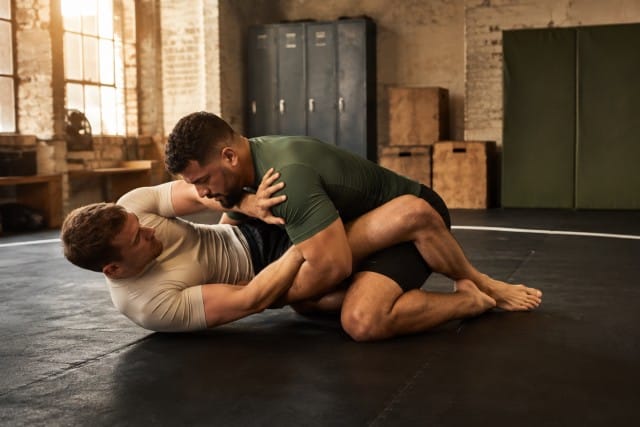
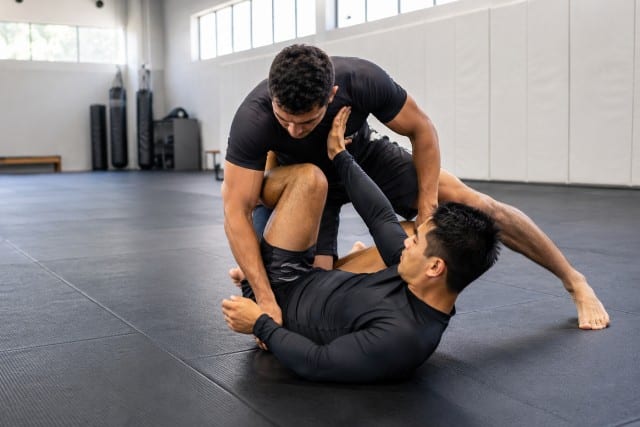
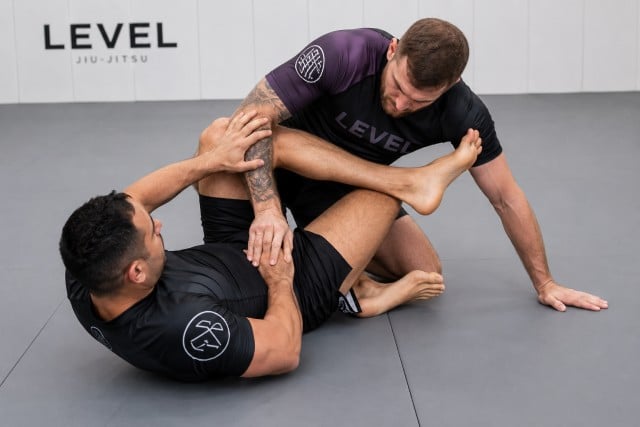
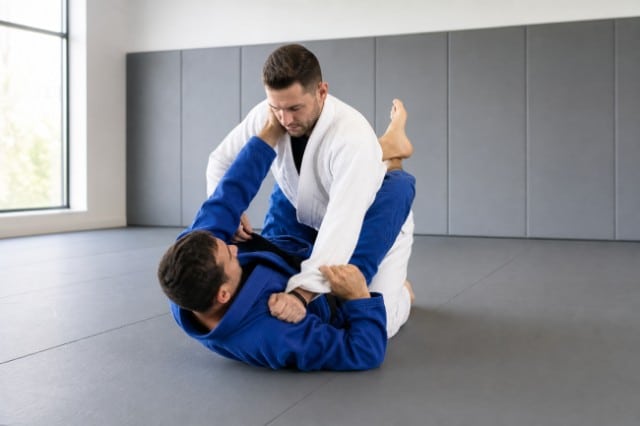
If your escapes work in drilling but disappear the moment a training partner adds pressure, you are not alone. That happens to a lot of BJJ students, especially in their first few years. The usual problem is not that you need more random reps. It is that your practice does not look enough like the problem you are trying to solve.
Good escape training builds timing, posture, frames, and decision-making under pressure. It teaches you when to move, not just where to put your limbs. If you are still building your overall foundation, our guide on how to learn BJJ is a helpful place to zoom out and organize your training.
In this article, you will learn how to drill escapes so they actually transfer to live rolling, which mistakes make escape practice feel fake, and how to structure a simple weekly approach that helps you improve faster.
Why Escape Drills Often Fail in Sparring
Most bad escape drilling has one thing in common: the bottom player already knows what is coming, and the top player is barely trying to stop it. That creates movement memory, but not escape skill.
In live rolling, escapes depend on several things happening at once:
- You have to recognize the exact kind of pressure you are under.
- You need enough structure to stay safe while you create space.
- You must time your movement when the top player shifts weight or attacks.
- You need a follow-up once the first opening appears.
If your drilling removes all of those variables, it can still be useful, but only as a first step. To make escapes work against resistance, you need practice that gradually adds realism.
What Good Escape Training Actually Builds
Effective escape practice is less about collecting techniques and more about building a few reliable habits:
- Finding frames before panic starts.
- Protecting your neck and inside space.
- Moving your hips before trying to bench-press someone off you.
- Connecting one escape attempt to the next instead of treating each move as isolated.
- Recovering to a meaningful position such as guard, turtle, or standing.
This is also why many coaches now use more live and game-based formats. If you want a deeper look at that idea, see ecological rolling for beginners, which explains how focused live situations can speed up learning.
A Better 4-Step Progression for Drilling Escapes
1. Start With Clean Mechanical Reps
At the beginning, it is fine to rehearse the basic shape of the movement. If you are working on a side control escape, for example, you might focus on frame placement, hip movement, and getting your knee back inside.
Keep this stage simple:
- Use a cooperative partner.
- Move slowly enough to notice details.
- Do short sets with feedback between reps.
- Focus on one escape pathway at a time.
This stage matters, but do not stay here too long. Mechanical reps teach you the map, not the drive.
2. Add Predictable Resistance
Once the movement is clear, have the top player give realistic pressure while still allowing the bottom player to work on the same task. The resistance should be honest, but limited.
Examples:
- Top player holds side control and tries to stay chest-to-chest, but does not attack submissions.
- Top player in mount stays heavy and follows the hips, but does not switch to a high mount or back take.
- Bottom player has one clear win condition: recover guard, get to turtle, or stand up.
This stage teaches you whether your frames and timing hold up when the other person is not helping.
3. Use Constraint-Based Rounds
This is where transfer usually improves the most. Instead of full sparring right away, narrow the situation and give both players a clear job.
For example:
- Start under side control. Bottom wins by regaining guard or coming to the knees. Top wins by holding for 30 seconds.
- Start in mount. Bottom can only escape through elbow-knee recovery. Top can attack position but not submissions.
- Start in back control. Bottom must first clear hand control before doing anything else.
If you want ready-made training formats like this, these ecological BJJ games are a strong companion resource.
4. Blend Escapes Into Full Rolling
After specific rounds, go into open sparring with one clear escape goal. Do not try to fix every weak area at once. Pick one theme for the session, such as:
- Finding inside frames before turning.
- Escaping side control without exposing your back.
- Recovering guard instead of exploding to turtle every time.
This lets you test whether the lesson survives a less predictable round.
Key Coaching Cues That Improve Most Escapes
Different positions have different details, but a few cues show up again and again:
- Frame first, move second. If you try to shrimp or bridge without structure, you usually just burn energy.
- Move your hips, not just your arms. Good escapes come from angle changes and space creation, not upper-body force.
- Win a small battle before the big one. Get an elbow inside. Clear a crossface. Trap a post. Do not skip steps.
- Expect follow-up reactions. A strong top player will adjust. Your first escape attempt often creates the opening for the second.
- Define the finish. Know whether you are trying to recover guard, come on top, or stand up.
Common Escape Drilling Mistakes
Drilling Too Fast
Fast reps can hide bad posture. Slow enough is usually better, especially early.
Using a Passive Top Partner
If the top player is just posing, the bottom player never learns how pressure changes the position.
Resetting After Every Failed Attempt
Real escapes often happen on the second or third effort. Let rounds continue long enough for chaining and adjustment.
Practicing Too Many Escapes at Once
It is better to own one reliable mount escape and one reliable side control escape than to vaguely remember six options.
Ignoring Recovery Position
Escaping the pin is not enough if you immediately give the position back. Finish in guard, turtle, or on top with intention.
A Simple Weekly Plan for Better Escapes
If escapes are a real weakness, try this structure for two to four weeks:
- Day 1: Mechanical reps plus predictable resistance from one position.
- Day 2: Constraint rounds from that same position.
- Day 3: Open rolling with one escape theme in mind.
- Day 4: Review what kept failing and tighten one detail, not five.
You can also support that process by studying one area at a time instead of bouncing between unrelated techniques. Our article on building a complete BJJ game with instructionals follows the same idea from a broader training perspective.
When Instructionals Can Help
If you keep getting stuck in bottom positions, a strong escape instructional can give you better structure and clearer concepts. The main thing is to use it to sharpen a current training problem, not as entertainment between classes.
For readers who want extra study material, this roundup of escape and survival instructionals is the most relevant internal next step.
Final Takeaway
The goal of escape drilling is not to look clean in a low-resistance rep. The goal is to stay composed under pressure, recognize openings, and recover to safety against someone who does not want to let you go.
If you want your escapes to work in live rolling, practice them in a way that teaches timing and decision-making, not just choreography. Start with clean reps, add realistic resistance, use focused live rounds, and carry one clear lesson into sparring. That is usually where escapes stop being theoretical and start becoming part of your game.