How to Escape Mount in BJJ: Bridge-and-Roll, Elbow Escape, and Common Mistakes
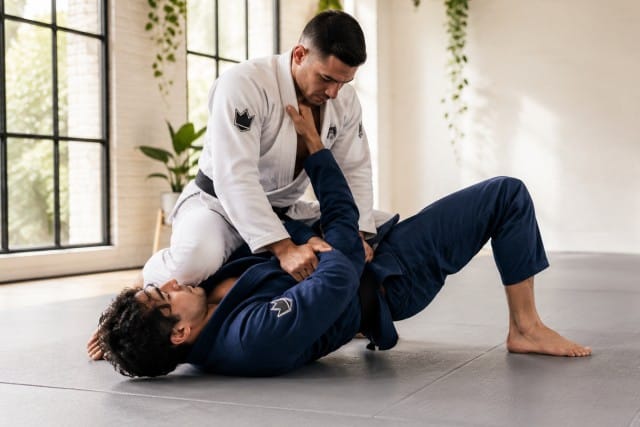
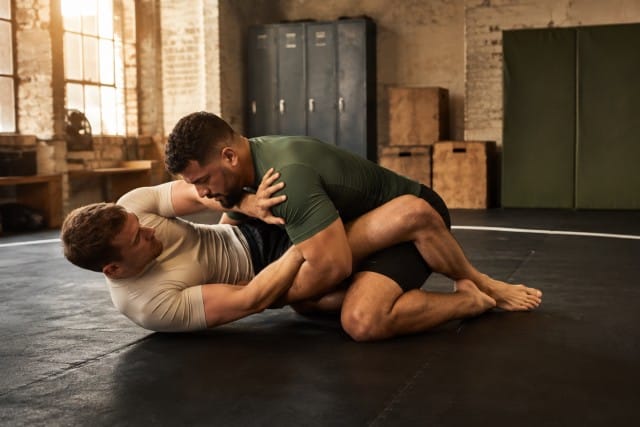
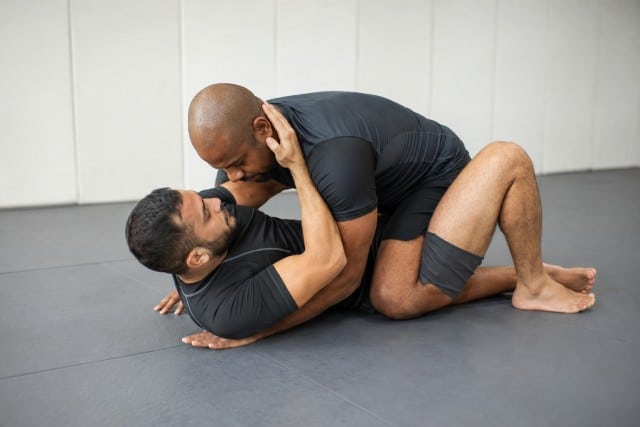
Mount is one of the first bad positions every BJJ student learns to hate. When someone settles their weight on top of you, controls your head, and starts climbing higher, it can feel like there is no space left to breathe, move, or think.
The good news is that mount escapes are not about exploding wildly or bench-pressing someone off you. They are about structure, timing, and choosing the right response for the kind of mount pressure you are dealing with. If you are still building your foundation, this is exactly the sort of defensive skill that belongs near the top of your priority list. If you are new to the art, our guide on how to learn BJJ explains why escapes and survival should come early in your development.
In this article, you will learn the two highest-value escapes most beginners should start with: the bridge-and-roll escape and the elbow escape. You will also learn when each one makes sense, what details matter most, and the common mistakes that keep people trapped under mount longer than they need to be.
What makes mount so difficult to escape?
Mount is powerful because the top player can attack while forcing you to carry their weight. They can follow your hips, climb higher on your torso, and use their hands to post whenever you try to buck them off balance.
That means mount escapes usually fail for one of three reasons:
- The bottom player bridges without trapping anything.
- The bottom player pushes with their arms instead of moving with their hips.
- The bottom player waits too long and lets the top player settle into high mount.
Your first goal is not to launch a perfect reversal immediately. Your first goal is to survive well enough to start escaping with intention. new
Step 1: Build survival posture before you try to escape
Before you worry about reversing or recovering guard, protect yourself. A stable defensive posture from bottom mount gives you the few seconds you need to choose the right escape.
Focus on these habits first:
- Keep your elbows tight to your ribs instead of reaching wide.
- Use your forearms to block the top player from climbing too high.
- Keep your chin tucked and avoid exposing your arms carelessly.
- Plant your feet close enough to your hips that you can bridge hard when the moment comes.
If your feet are too far away and your elbows are flared, your escapes will feel weak even if you know the correct technique.
The bridge-and-roll escape: best when the top player posts poorly
The bridge-and-roll escape, often called the upa, is one of the first mount escapes most people learn for a reason. It is simple, direct, and still works at every level when the top player gives you the right reaction.
When to use it
This escape is strongest when your opponent is in a lower mount and one of their arms becomes vulnerable to being trapped. It also works well when they are attacking, cross-facing aggressively, or posting their hand on the mat where you can isolate it.
Key steps
- Trap one arm by controlling the wrist and pinning the elbow tight to your body.
- On the same side, trap their foot by stepping over it or catching it with your foot so they cannot post the leg.
- Bring your heels close to your hips.
- Bridge up first to load their weight.
- Roll toward the trapped side at an angle, not straight sideways.
The detail most beginners miss is the direction of the bridge. Do not just throw yourself left or right. Drive your hips up high first, then turn the corner. If you skip the upward bump, the top player stays heavy and posts before your roll gets going.
Coaching cues that help
- Think “trap, bump, roll,” in that order.
- Glue the trapped elbow to your chest so the arm cannot slip free.
- Roll toward the shoulder of the trapped arm, not toward empty space.
The elbow escape: best when you can make space at the knee line
The elbow escape is often the more reliable long-term answer because skilled top players are hard to reverse cleanly. Instead of trying to throw them over you, you create space and recover one of your legs back inside.
When to use it
Use the elbow escape when the top player is balanced, posting well, or staying low enough that a reversal is unlikely. This is also a strong follow-up after your bridge makes them adjust their base.
Key steps
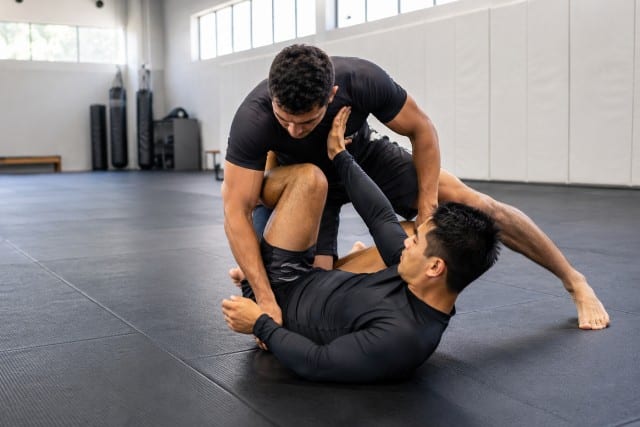
- Bridge to force the top player to post or lighten their weight.
- As they settle back down, turn slightly onto your side.
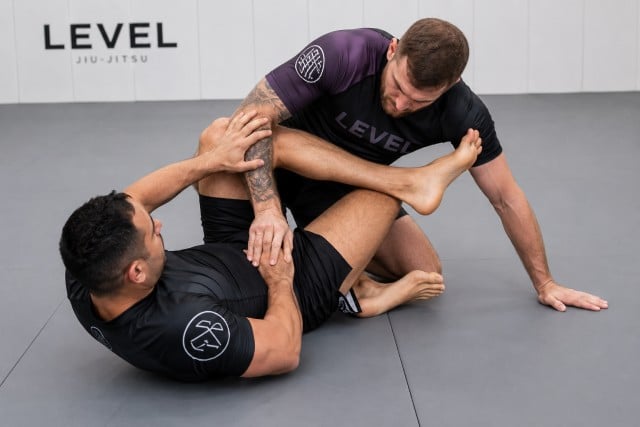
- Use your elbow and forearm to create space near their knee, not up near their chest.
- Shrimp your hips away just enough to slide your bottom knee inside.
- Recover half guard or full guard depending on the space you create.
The elbow escape is not one giant motion. It is usually a series of small, stubborn wins: bridge, frame, shrimp, insert the knee, recover guard. If you try to do it all at once, you often give up inside space and get flattened again.
Coaching cues that help
- Escape the knee line, not the head position first.
- Shrimp only after your bridge creates a reason for their weight to shift.
- Be happy recovering half guard if full guard is not available.
How the two escapes work together
Many beginners think they need to choose one mount escape and make it work no matter what. In practice, the best escapes come in pairs.
The bridge-and-roll makes the top player post. The elbow escape takes advantage of the space that appears when they widen their base. The elbow escape makes the top player pull their knee back or adjust their pressure. That reaction can reopen the reversal.
In other words, you should not think “Which single escape do I memorize?” Think “Which reaction does my first escape create?” That mindset helps you build a real system instead of a one-move answer.
Common mount escape mistakes
1. Bridging with flat feet too far away
If your feet are too far from your hips, you cannot generate enough lift. Bring them in before you explode.
2. Trying to bench-press the opponent
Pushing straight up with your arms burns energy and exposes your elbows. Use your hips, frames, and timing instead.
3. Forgetting to trap the foot on the upa
You can trap the arm perfectly and still fail if the top player posts their leg. Control the whole side before you commit.
4. Shrimping before creating space
If you try to hip-escape while the top player is fully settled, you usually just move yourself deeper into trouble. Bridge first, then shrimp.
5. Waiting until high mount is fully established
Once the top player climbs high under your armpits, escapes become much harder. Start working early, even if your first job is only to recover elbow position and deny the climb.
How to practice mount escapes so they actually improve
Mount escapes get better when you train them with increasing resistance, not only with static reps. Start with cooperative drilling so you understand the mechanics, then move into positional rounds where your partner tries to hold mount while you focus only on escaping.
If you want more focused ways to train this without turning every round into chaos, try adding simple ecological BJJ games that begin from mount and reward either recovery to guard or reversal to top. That gives you realistic timing without needing a huge list of memorized steps.
Solo work can help too, especially if you are sharpening hip movement between classes. Our guide on learn BJJ at home covers useful ways to build movement and understanding outside the gym.
What should beginners study next?
If mount is a recurring problem in your sparring, stay with it for a few weeks instead of bouncing to ten other topics. That kind of focused study is exactly how you build a complete BJJ game over time.
And if you want extra study material, a good escape-focused instructional can speed up your understanding of frames, timing, and defensive layers. This roundup of the best instructionals for escapes and survival is a strong place to start.
Final thoughts
Escaping mount is not about having one magical move. It is about recognizing when to reverse, when to recover guard, and how to stay calm long enough to do either one well.
For most beginners, the right starting point is simple: protect your elbows, bridge with purpose, trap what matters, and use the bridge-and-roll and elbow escape as connected answers rather than separate techniques. If you can do that consistently, mount will stop feeling like the end of the exchange and start feeling like a position you know how to solve.