BJJ Bruises: Why They Happen, How to Avoid Them, and How to Treat Them
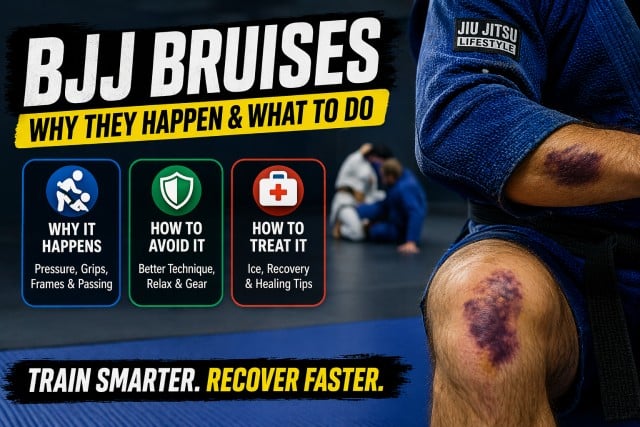
BJJ bruises happen because Brazilian Jiu-Jitsu puts repeated pressure on the body through grips, top pressure, frames, passing, and scrambles. Most bruises are minor and heal on their own, but you can reduce them by improving technique, relaxing more during rolls, wearing protective training gear, and managing recovery properly.
If you train Brazilian Jiu-Jitsu regularly, bruises are part of the experience. Some show up on your arms from grips, some on your legs from passing exchanges, and others on your ribs or shoulders after hard rounds. They can look ugly, but most of the time they are a normal part of grappling.
This guide explains why BJJ bruises happen, how to avoid them, how to treat them, and when a bruise may be a sign that something more serious is going on.
What Causes Bruises in BJJ?
A bruise forms when small blood vessels under the skin break and leak blood into the surrounding tissue. In BJJ, that usually happens because of pressure, friction, impact, or repeated contact in the same area.
The most common causes of bruises in BJJ are:
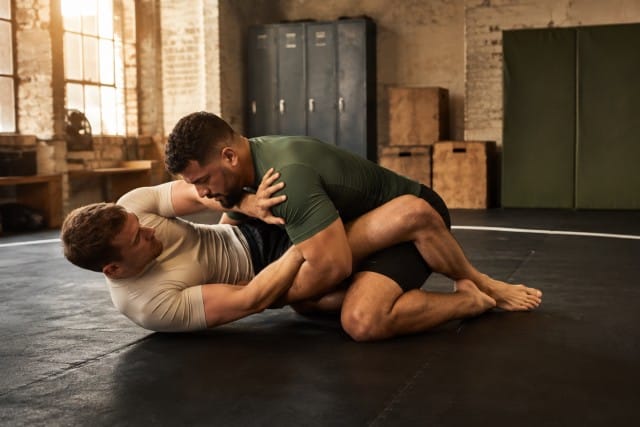
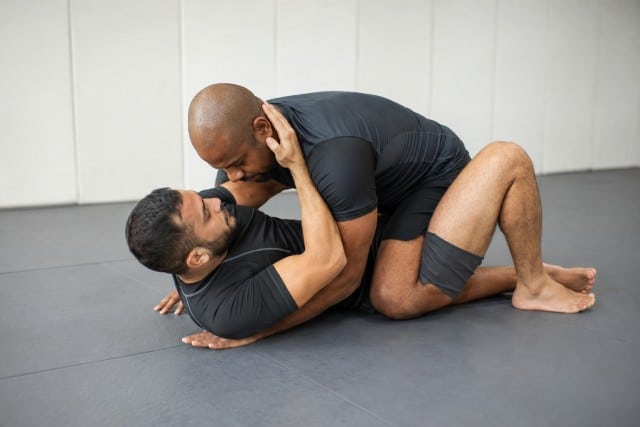
- Heavy top pressure from side control, mount, and knee-on-belly
- Gi grips on the sleeves, collar, wrists, and arms
- Frames and defensive movements under pressure
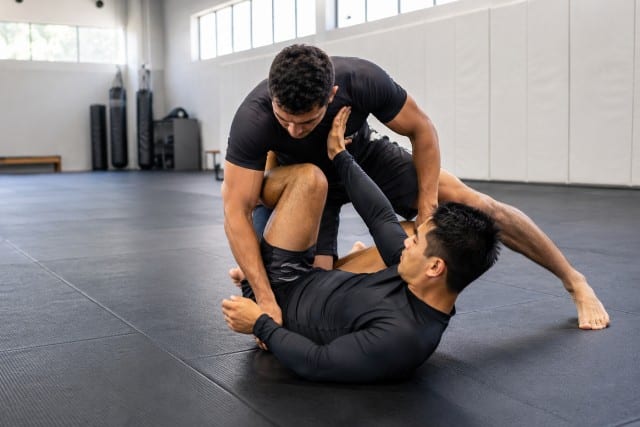
- Guard passing exchanges, especially knee cuts and body lock passing
- Takedowns, scrambles, and accidental collisions
- Repeated drilling of the same movement
In simple terms, BJJ bruises happen because grappling puts your body under constant pressure from another person who is trying to control, pin, or move you.
Why Do Beginners Get More BJJ Bruises?
Beginners usually bruise more because their bodies are not yet used to the pressure and they often tense up during training.
This happens for a few reasons:
- You spend more time stuck in bad positions
- You use strength instead of timing and positioning
- You absorb pressure instead of redirecting it
- Your body has not adapted to regular grappling contact yet
As your technique improves, you usually start bruising less. You learn how to frame better, move earlier, and avoid letting people settle their weight on you for long periods.
If you are still building your foundation, our best BJJ instructionals for beginners guide can help you improve the basics that reduce damage during training.
Are BJJ Bruises Normal?
Yes, mild bruising is normal in Brazilian Jiu-Jitsu. Most practitioners get bruises from time to time, especially when training hard, learning new positions, or rolling with stronger training partners.
Typical BJJ bruises:
- Feel tender for a few days
- Change color as they heal
- Fade within 1 to 2 weeks
Bruising becomes more common when training volume goes up, when gi grips are strong, or when you have several hard sessions in the same week.
How to Avoid BJJ Bruises
You cannot eliminate bruising completely in BJJ, but you can reduce it a lot.
1. Improve Your Technique
The better your technique, the less punishment you absorb. Good frames, earlier movement, and better positioning all reduce the amount of pressure you take.
- Learn to frame before pressure settles
- Do not stay flat under side control or mount
- Use angles and structure instead of pure strength
This is one reason system-based instructionals can be so helpful. If you want to improve your defensive structure and movement, see our guide to the best BJJ instructionals.
2. Relax More During Rolling
Tension makes everything worse. When you tense up, you absorb more pressure and react later. Relaxed movement helps you breathe, frame, and escape earlier.
Beginners often bruise more simply because they try to fight every position too hard.
3. Wear Rash Guards, Spats, and Proper Training Gear
Protective clothing helps reduce friction and gives your skin a small buffer during training.
- Long-sleeve rash guards can reduce grip-related irritation
- Spats can help limit mat burn and contact on the legs
- A well-fitted gi can reduce unnecessary rubbing and bunching
If you are still choosing your gear setup, our BJJ gi brand list may help.
4. Choose Training Partners Wisely
Some rounds are technical. Some rounds are hard. If every session turns into a war, bruising tends to pile up fast.
- Train with controlled partners when you need a lighter day
- Communicate if you are carrying soreness or a bad bruise
- Do not feel forced to match reckless intensity
5. Build Strength and Structure
Stronger muscles give the body more support and protection. You do not need bodybuilding-level size, but general strength can help reduce wear and tear.
Areas that matter most:
- Core
- Shoulders
- Neck
- Hips
- Legs
How to Treat BJJ Bruises
Most BJJ bruises can be treated with ice, rest, light movement, and time.
1. Ice the Bruise Early
During the first 24 hours, ice can help reduce swelling and discomfort.
- Apply ice for 10 to 15 minutes at a time
- Repeat a few times during the day
- Do not put ice directly on the skin
2. Reduce Pressure on the Area
If the bruise is painful, avoid letting training partners put repeated pressure on it for a few days. You do not always need to skip training, but you may need to modify how you roll.
3. Use Heat Later if Needed
After the first day or two, some people find that light heat helps the area feel better by increasing circulation. This is more useful once swelling has settled down.
4. Stay Hydrated and Recover Well
Recovery matters. Sleep, hydration, and good nutrition all help the healing process.
- Drink enough water
- Eat enough protein
- Do not stack hard sessions if your body is already beat up
5. Train Around It if Needed
If the bruise is minor, you can usually keep training. Just avoid making the same area take repeated damage every round.
How Long Do BJJ Bruises Last?
Most BJJ bruises start improving within a few days and disappear in 1 to 2 weeks.
Smaller bruises may fade quickly. Deeper bruises, especially on the legs, ribs, or hips, can last longer.
In general:
- Mild bruises: a few days to 1 week
- Moderate bruises: 1 to 2 weeks
- Deeper bruises: sometimes more than 2 weeks
When Is a BJJ Bruise a Problem?
Most bruises are harmless, but some signs suggest you should be more careful.
Pay attention if you have:
- Severe swelling
- Sharp or worsening pain
- A hard lump that does not improve
- Limited movement in a joint
- Bruising that appears easily without much contact
- Bruises that do not heal after a couple of weeks
A large, painful swelling may be more than a normal bruise. If something feels off, it is smart to get it checked.
Do You Bruise Less Over Time in BJJ?
Yes, most people bruise less as they gain experience.
That is usually because:
- Your body adapts to grappling pressure
- Your timing gets better
- You stop spending as much time in bad positions
- You learn how to manage hard rounds better
Experienced grapplers still get bruises, but usually less often and with less surprise.
BJJ Bruises vs Other Common Training Issues
Bruises are common, but they are not the only physical issue BJJ athletes deal with. Mat burn, sore fingers, grip fatigue, stiff necks, and overuse aches are also part of training.
If you are trying to get better at recovering and training smarter, our guide on how to learn BJJ may also help you build better habits on and off the mats.
How to Train Smarter if You Bruise Easily
If you seem to bruise more than everyone else in the room, the answer is not always to stop training. Often it means you need to train a little smarter.
- Reduce the number of hard rounds each week
- Spend more time on positional sparring
- Choose technical rounds over ego rounds
- Improve escapes and defensive frames
- Use instructionals to clean up weak areas
If you are an older grappler, this matters even more. Our guide to the best BJJ instructionals for older grapplers covers learning resources built around timing, efficiency, and smarter movement.
Frequently Asked Questions
Why do I get bruises from BJJ?
You get bruises from BJJ because grappling puts repeated pressure on the body through grips, frames, top pressure, passing, and scrambles. Small blood vessels under the skin break and leak into the surrounding tissue.
Are BJJ bruises normal?
Yes, mild bruising is normal in BJJ. Most bruises are harmless and fade within 1 to 2 weeks.
How do you treat BJJ bruises?
Treat BJJ bruises with ice during the first 24 hours, reduced pressure on the area, good hydration, and time. Most minor bruises heal on their own.
How can I avoid bruising in BJJ?
You can reduce bruising by improving technique, relaxing more during rolls, wearing rash guards or spats, choosing training partners wisely, and managing recovery better.
Do BJJ bruises get better over time?
Yes, most people bruise less as they gain experience because their body adapts and their technique improves.
When should I worry about a bruise from BJJ?
You should be more careful if the bruise causes severe swelling, sharp pain, a hard lump, limited movement, or does not improve after a couple of weeks.
Final Thoughts
BJJ bruises are common, especially when you are new, training hard, or spending too much time under pressure. In most cases, they are not a big problem. The key is learning how to reduce unnecessary damage through better technique, smarter training, and better recovery.
If your goal is to stay on the mats longer and improve faster, focus on the habits that matter most: better movement, better defense, better partner selection, and better recovery between sessions.