Half Guard Underhook Battle BJJ
Half guard can feel messy when you first start using it. Sometimes you get flattened and stuck. Other times, you almost come up, but your partner cross-faces you, kills your movement, and passes. In many of those exchanges, the real issue is not the sweep itself. It is the underhook battle that happens before the sweep ever starts.
If you can consistently win the underhook from bottom half guard, you give yourself a way to build up to your side, connect your hips to your opponent, and start attacking with purpose. If you lose that battle, half guard often becomes a matter of survival rather than offense. If you are still building your foundations, our step-by-step guide to learning BJJ is a useful companion to the ideas in this article.
Why the underhook matters so much in half guard
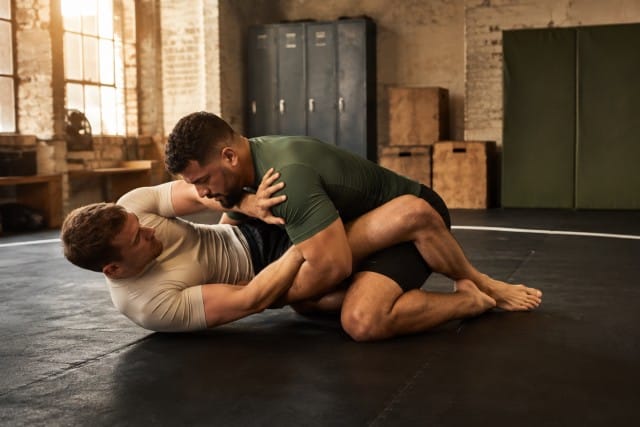
The underhook is powerful because it changes the angle of the position. Instead of being pinned flat underneath your opponent, you start turning onto your side and connecting your upper body to theirs. That gives you better access to:
- Coming up to your knees or elbow
- Driving into a dogfight-style position
- Off-balancing your opponent forward
- Reaching the back or forcing a post
- Building simple sweeps without needing explosive movement
In practical terms, the underhook helps you stop being carried by the top player’s pressure. You begin to steer the exchange instead.
What winning the underhook actually looks like
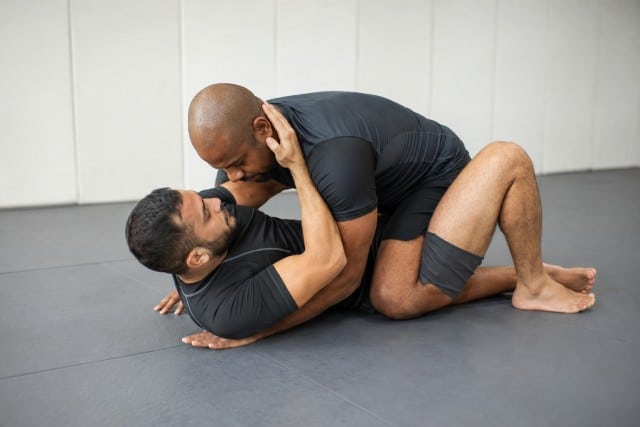
Many people think “get the underhook” just means throwing an arm deep and hoping for the best. In reality, winning the underhook means three things happen together:
- Your body gets onto its side instead of staying flat
- Your head comes tight to your opponent, usually under their chin or against their ribs
- Your underhook connects to movement, not just a static grip
If your arm is under their far side but your shoulders are still flat on the mat, you do not really own the position yet. The arm matters, but your angle matters more.
Step 1: Build the position before you reach
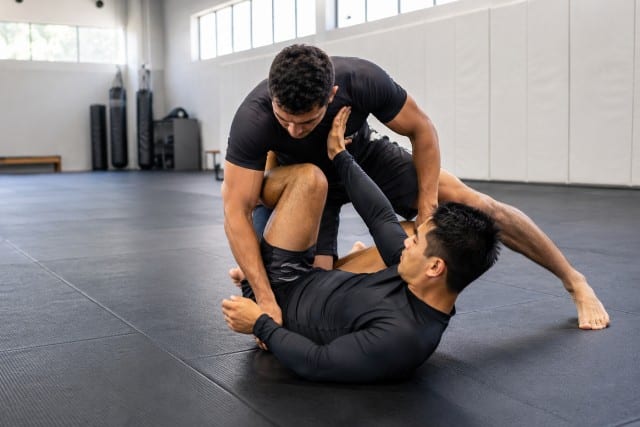
The biggest beginner mistake is reaching for the underhook too early. If you try to dig for it while flat on your back, you usually give your opponent an easy crossface, a whizzer, or a chance to staple your shoulders down.
Before you reach, focus on these details:
- Get onto your side, facing your opponent
- Use your outside foot to help move your hips underneath you
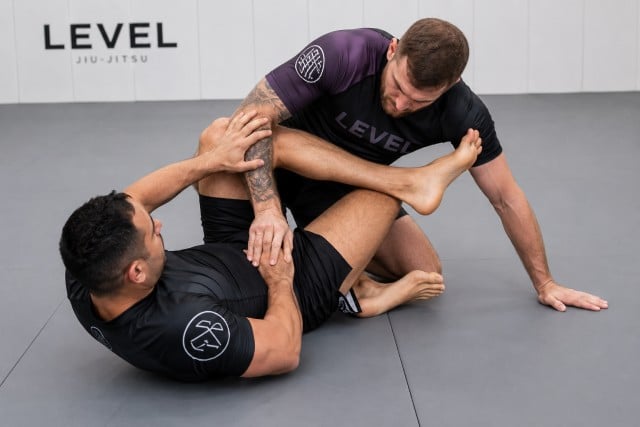
- Keep your inside elbow tight so you are not giving space
- Use your frames to make enough room to turn
This is one reason solo movement and hip mobility still matter outside live training. If you want extra ideas for that side of your development, see how to learn BJJ at home.
Step 2: Hide your hand and dig with timing
Once you are on your side, the underhook usually comes from timing rather than speed. Good moments to dig for it include:
- When your opponent adjusts their base
- When they switch from pressure to hand fighting
- When they try to advance their crossface arm
- When they briefly lift their chest to move
Think about sliding your hand into space, not swinging your arm in a big motion. A short, hidden path is harder to block. Your goal is to connect tightly to their far side and immediately start coming up.
Step 3: Get your head in the right place
Head position is one of the details that separates a strong underhook from a weak one. After you dig the underhook, bring your head tight to your opponent. Do not leave it low and loose.
Good head position helps you:
- Stay connected when they sprawl or whizzer
- Drive forward without overreaching
- Prevent them from circling easily behind you
- Start building to your knees with balance
A simple cue is this: underhook with your arm, but win the position with your shoulder and head.
Step 4: Move immediately after you get it
One of the worst habits in half guard is finally getting the underhook and then pausing. If you stop moving, the top player has time to whizzer, crossface, backstep, or flatten you again.
As soon as you connect the underhook, start one of these follow-ups:
- Come up to your elbow and then your hand
- Drive into your opponent to force them to post
- Chase a dogfight position
- Turn the corner toward the back if they pressure forward
You do not need ten sweep options at first. You just need one or two reliable reactions connected to a clean underhook.
Three simple follow-ups after you win the underhook
1. Come up into the dogfight
This is one of the most natural next steps. Once you are on your side with the underhook, begin rising underneath your opponent. Keep your hips engaged and your head tight. From there, you can run them forward, reach for a better angle, or continue to a finish depending on their reaction.
2. Force a post and chase the sweep
If your opponent bases out with their free hand, that post can become the opening for a basic half guard sweep. The exact finish varies by style, but the principle stays the same: your underhook forces a reaction, and the reaction creates the sweep.
3. Turn the corner to the back
Sometimes the top player pressures you too hard to stop the sweep. That can expose their back. If you stay connected and keep climbing with your underhook, back exposure often comes before a clean reversal.
Common mistakes that make the underhook fail
- Reaching while flat on your back
- Ignoring head position after getting the underhook
- Trying to win with arm strength alone
- Pausing instead of coming up immediately
- Accepting the crossface before starting the battle
- Forgetting to use your lower body to stay connected
If half guard keeps breaking down for you, look at those mistakes before hunting for a more advanced sweep.
What to do when your opponent blocks the underhook
You will not always get it on the first try, especially against experienced training partners. That is normal. The answer is not to force it harder. Usually, you need to improve the layer before the underhook:
- Create a better angle with your hips
- Use frames to clear pressure first
- Win inside elbow position
- Make your opponent react before you dig
This is also where positional sparring helps a lot. Short, specific rounds from half guard will expose exactly where your sequence breaks down. For that kind of targeted training, this guide on using constraints to target weak spots in your BJJ game fits well with the approach here.
How to practice this without overcomplicating it
Keep your practice narrow at first. Start in bottom half guard and give yourself one job: get onto your side, win the underhook, and come up. That is enough.
A simple training progression looks like this:
- Drill the turn to your side and underhook entry slowly
- Do light positional rounds where your partner tries to flatten you
- Add one follow-up, like coming up to dogfight
- Only later add secondary sweeps or back takes
If you prefer studying positions through a more structured system, you may also want to review how to build a complete BJJ game using online instructionals. And if you want a deeper look at the position itself, this Gordon Ryan half guard instructional review is one of the more relevant site resources for continued study.
Final thoughts
The half guard underhook is not just another grip fight. It is often the moment that decides whether you stay stuck underneath or start attacking. If you focus on angle first, dig with timing, keep your head tight, and move as soon as you connect, your half guard will become much more functional.
Do not worry about collecting a dozen sweeps right away. Build a dependable underhook battle first. Once that part becomes reliable, the rest of your half guard game gets much easier to grow.