Closed Guard in BJJ for Beginners: Posture Breaks, Angle Changes, and 3 First Attacks
Closed guard is one of the first positions most people learn in Brazilian Jiu-Jitsu, but it can also be one of the first places they get stuck. A lot of beginners can lock their legs around an opponent, but they cannot keep posture broken, create an angle, or turn the position into real offense.
This guide will show you how to make closed guard more functional. You will learn what your main goals are, how to break posture without wasting energy, how to create angles, and three reliable first attacks that fit well together. If you are still building your general foundation, our step-by-step guide to learning BJJ is a good place to pair with this article.
What Closed Guard Is Supposed to Do
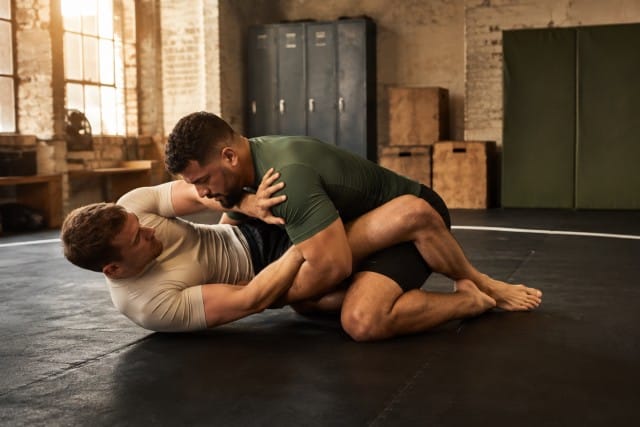
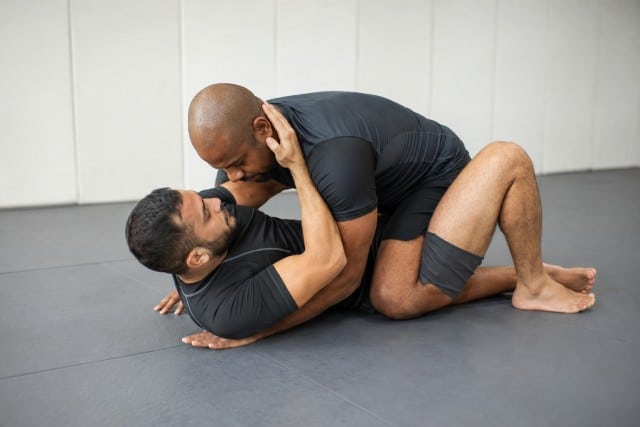
Closed guard is not just a position where you hold on and wait. It is a control position from bottom. Your legs limit your opponent’s movement, your grips manage distance and posture, and your hips create the angle needed for sweeps or submissions.
At a beginner level, closed guard works best when you think about it in this order:
- Break posture
- Control one or both arms
- Create an angle
- Attack or off-balance
If you skip straight to submissions before dealing with posture and angle, your attacks will usually feel weak.
Your First Priority: Break Posture
If your opponent has strong posture inside your closed guard, they can start opening your legs, standing up, or pressuring your hips. Before you think about triangles, armbars, or kimuras, make them carry your weight and pull their head and shoulders forward.
Simple ways to break posture
- Pull with your legs while drawing your knees toward your chest
- Use a collar tie or head control to bring their head forward
- Control one sleeve so they cannot easily post
- Keep your hips active instead of lying flat
You do not need to yank as hard as possible. Think of posture breaking as a combination of your legs, grips, and timing. Your legs are usually stronger than your arms, so let them do more of the work.
Good cues for beginners
- Keep your heels engaged instead of crossing your feet loosely
- Bring your knees in when you pull them forward
- Keep your head off the mat when you attack
- Use your grips to guide posture, not to dead-hang on the neck
The Second Priority: Create an Angle
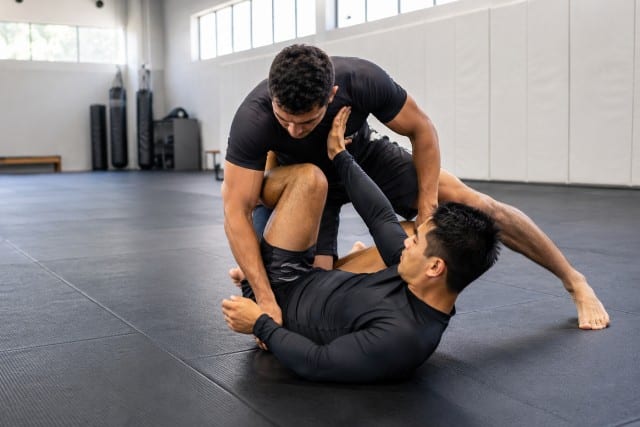
Many beginners try to attack straight underneath their opponent. That usually leads to getting stacked, stuffed, or forced flat. Closed guard becomes much more dangerous when you shift slightly to one side.
Even a small angle can make a huge difference. Your hips line up better for armbars and triangles, and your opponent has a harder time keeping both arms safe.
How to make the angle
- Pull one arm across your center line
- Shrimp your hips a few inches out to one side
- Climb your guard higher if their posture is already broken
- Use your leg on one side to help pivot your hips
If you want more ways to sharpen live problem-solving from positions like this, the article on learning BJJ with the ecological approach fits well here, especially for building timing rather than memorizing isolated steps.
Three Reliable First Attacks From Closed Guard
You do not need ten submissions at the start. Three connected attacks are plenty. These work well because they all come from posture control, arm isolation, and angle changes.
1. Hip Bump Sweep
The hip bump sweep is one of the best first attacks because it teaches you to sit up, force a reaction, and connect upper-body control with your hips.
Basic idea: When your opponent posts upright, sit up, control an arm, and drive your hips into them as you turn toward the posting side.
What to focus on:
- Sit up quickly rather than slowly climbing
- Trap or monitor the posting arm
- Drive with your hips, not just your shoulders
- Come up on top immediately after the sweep
This attack is especially useful because it often makes your partner post a hand or pull their elbow back, which opens follow-up attacks.
2. Kimura
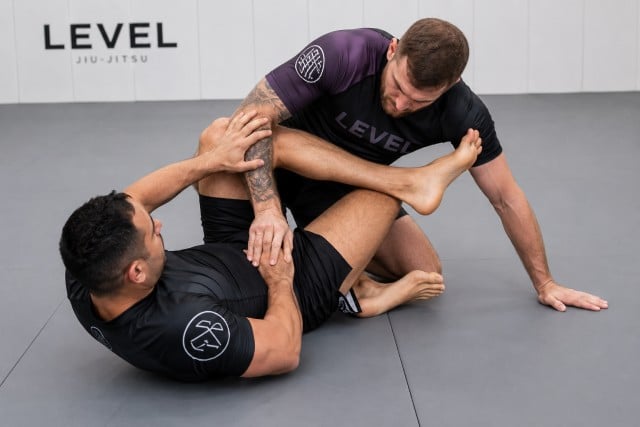
The kimura is a natural next attack when your opponent posts a hand on the mat or keeps an arm too far from their body. You can attack it as a submission, but it is also valuable as a control point that leads to sweeps and back takes.
Basic idea: Sit up, isolate one arm, and connect your figure-four grip before your opponent can retract the elbow.
What to focus on:
- Get their hand away from their center line
- Clamp your elbow tight once you lock the grip
- Use your body angle to keep their shoulder exposed
- Think control first, finish second
If you are also building your study plan outside class, the guide on how to build a complete BJJ game using online instructionals can help you organize positions like closed guard into a more coherent system.
3. Triangle Choke
The triangle is often available when your opponent defends the kimura or leaves one arm in and one arm out. It rewards good angle creation more than brute force.
Basic idea: Control posture, isolate one arm, shoot your leg over the shoulder and neck, then turn the angle before locking the finish.
What to focus on:
- Break posture before throwing your leg
- Cut an angle before trying to finish
- Pull the head only after your legs are in place
- Use your hamstrings and leg line, not just arm strength
For beginners who want extra study material around foundational positions and attacks, this roundup of the best BJJ instructionals for beginners is a useful companion resource.
How These Attacks Fit Together
Closed guard becomes much easier when you stop treating every move as separate.
- If posture comes up, attack the hip bump sweep
- If they post a hand, attack the kimura
- If they pull an arm across or leave one arm in, attack the triangle
That is enough of a beginner decision tree to start rolling with purpose instead of guessing.
Common Closed Guard Mistakes Beginners Make
Trying to attack from flat on the mat
If your shoulders stay pinned and your hips never move, your opponent can stay safe and patient. Sit up when you need to, shift your hips, and make them adjust.
Using too much arm strength
Beginners often pull the head with their arms and forget their legs are their strongest control tool in closed guard. Use your knees and hips to do more of the job.
Crossing ankles loosely
A lazy closed guard is easy to open. Keep your legs active and connected so your opponent feels your control.
Forcing submissions that are not there
If posture is strong and the angle is poor, reset and improve your control first. You will save energy and create better openings.
Ignoring posture safety in training
When working from bottom, avoid cranking awkwardly on your own knees or twisting hard just to keep your guard closed. If a position feels unstable or painful, reset and rebuild with better structure. For a broader look at staying healthy on the mats, see this guide to common knee injuries in Brazilian Jiu-Jitsu.
A Simple Closed Guard Training Plan for Beginners
If you are new, keep your practice narrow for a few weeks.
- Round 1 focus: break posture and hold closed guard
- Round 2 focus: create one angle and recover if you get flattened
- Round 3 focus: alternate between hip bump and kimura
- Round 4 focus: look for the triangle only after the reaction appears
This gives you a small but useful game: control, angle, first attack, follow-up attack.
Final Thoughts
Closed guard does not need to be fancy to work. At the beginner level, it becomes effective when you stop chasing random submissions and start respecting the position’s basic sequence: break posture, control an arm, make an angle, then attack.
If you build those habits first, your closed guard will feel much less passive and much more dangerous.