BJJ Guard Retention for Beginners: Frames, Hip Movement, and 5 Recovery Habits
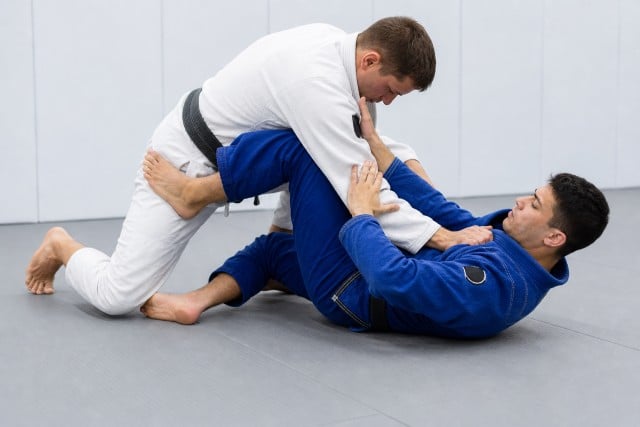
Guard retention is one of the first defensive skills that changes how Brazilian Jiu-Jitsu feels. Before you develop a dangerous guard, you need to stop people from running around your legs, flattening your hips, and settling into side control. For beginners, that usually means learning a few simple habits rather than chasing flashy inversions or advanced counters.
In this guide, you will learn what guard retention really is, what your main job should be when someone starts passing, and five reliable recovery habits that help beginners keep their guard longer and recover it faster.
If you are still building your overall foundation, our BJJ for beginners guide is a good companion to this article.
What Guard Retention Actually Means
Guard retention is your ability to keep your legs, hips, and frames between you and your opponent as they try to pass. In simple terms, it means you stop their chest from getting past your knees and settling into dominant top position.
At beginner level, guard retention is less about memorizing ten specific guards and more about understanding three priorities:
- Keep your knees and shins between you and the passer.
- Use frames before their weight fully settles on you.
- Move your hips early enough to recover angle and distance.
If you lose all three at once, you usually get passed. If you preserve even one of them, you often still have a path back to safety.
Your First Goal Is Not to Attack
Many beginners lose guard because they try to grab submissions or off-balance their partner before they have rebuilt structure. The first goal of guard retention is not offense. The first goal is to rebuild position.
When someone starts passing, ask yourself:
- Can I put a frame in front of their shoulders or hips?
- Can I get my knee back inside?
- Can I turn onto my side instead of staying flat?
Those questions will usually save you faster than thinking about sweeps or submissions.
The 5 Guard Retention Habits Beginners Should Build
1. Frame Before the Pressure Arrives
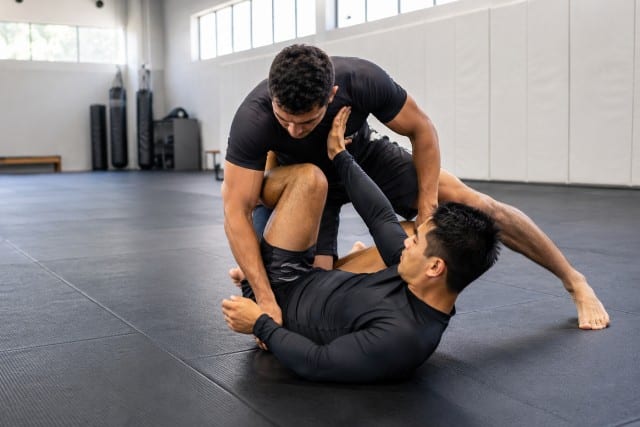
Good guard retention starts before the pass is complete. If you wait until your opponent has chest-to-chest pressure, your options shrink quickly. Use your hands, forearms, shins, and feet to create barriers early.
Useful beginner frames include:
- A hand or forearm on the shoulder line to stop forward collapse.
- A frame near the biceps to slow upper-body control.
- A shin across the torso or hip line to manage distance.
- A foot on the hip to stop direct forward pressure.
The key is not to bench-press your partner away. Your frame buys time so your hips and knees can recover position.
2. Stay on Your Side More Than Your Back
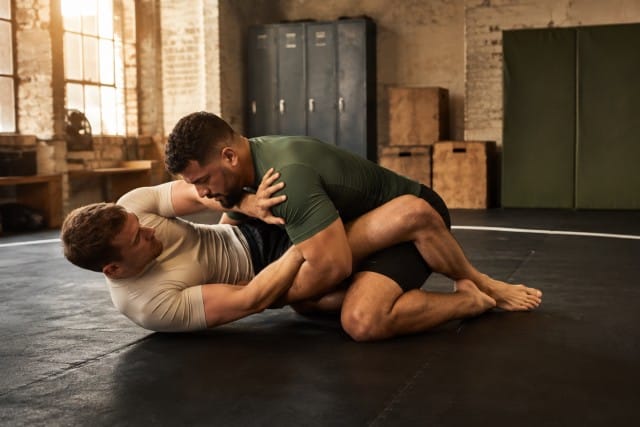
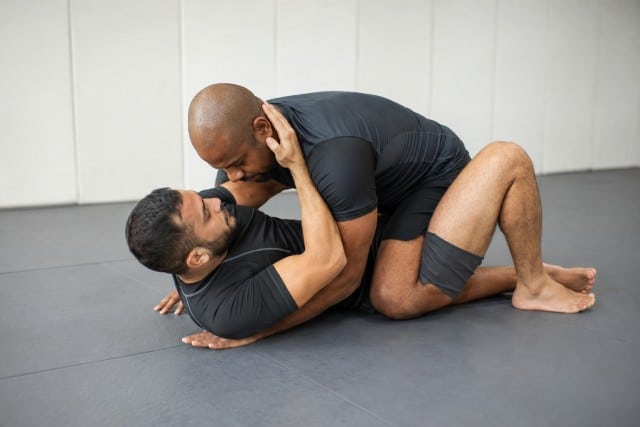
Flat hips make retention hard. When you are flat on your back, your legs become slower, your frames weaken, and your opponent can connect their weight more directly into you.
Whenever possible, turn slightly onto one hip so you can move, retract your bottom knee, and re-angle your top leg. Think mobile, not pinned.
This is one reason solo movements matter. If you want extra work between classes, our guide on learning BJJ at home includes movement ideas that support retention, such as shrimping and technical stand-ups.
3. Win the Knee Line Back
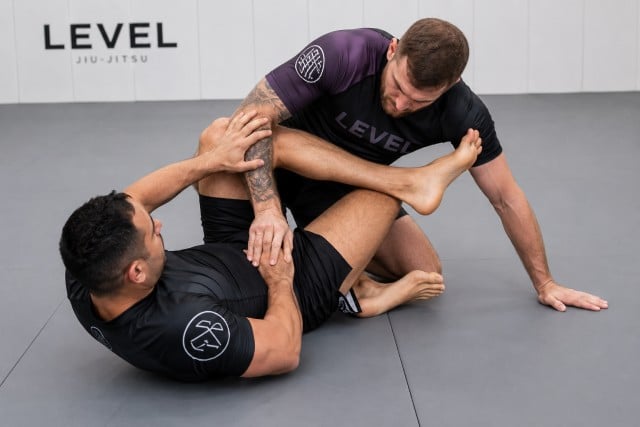
One of the simplest guard retention ideas is this: if your knee gets back inside, your guard often comes back with it.
Beginners often focus only on pushing with their arms, but the more important recovery is usually getting a knee back between your body and the passer. That knee can become a shield, a frame, or the start of a new open guard.
When your opponent beats one leg, do not panic. Try to:
- Frame with your upper body to slow them down.
- Shrimp just enough to create space.
- Pummel your knee back inside.
- Reconnect your second leg once the first barrier is back.
This is a much better habit than kicking wildly or extending both legs without structure.
4. Recover in Layers, Not in One Big Explosion
Guard retention usually happens in steps. First you stop the pass. Then you create a little space. Then you recover one knee. Then you reconnect both legs. Then you square up again.
Beginners often try to do everything in one dramatic bridge or huge shrimp. Sometimes that works, but more often it creates openings for crossfaces, body locks, or quick angle changes.
Think in layers:
- Layer 1: Stop forward pressure.
- Layer 2: Turn onto your side.
- Layer 3: Insert knee or shin.
- Layer 4: Recover a stable open guard.
This mindset makes retention calmer and more repeatable.
5. Reset to a Guard You Actually Know
After you recover space, do not force yourself into a complicated position you cannot maintain. For most beginners, a good reset means one of three things:
- Feet on hips with distance.
- Knee shield style structure.
- Basic open guard with both knees facing the passer.
The point of guard retention is not to look advanced. It is to regain a position where you can slow the exchange down and make a good next decision.
If you are building a study plan around the fundamentals, our roundup of the best BJJ instructionals for beginners can help you choose material that covers frames, escapes, and positional structure clearly.
Common Guard Retention Mistakes Beginners Make
- Reaching too far with both arms and giving up inside position.
- Staying flat instead of turning onto a hip.
- Trying to invert before they can manage basic frames and knee recovery.
- Panicking once one leg gets beaten and abandoning the position too early.
- Pushing hard with the arms but failing to move the hips.
If one sentence sums up beginner guard retention, it is this: do not fight the passer with your arms alone.
A Simple Decision Tree for Guard Retention
When someone starts passing your guard, use this quick sequence:
- If they are far away, manage distance with feet and shins.
- If they close distance, frame before chest pressure settles.
- If they beat a leg, turn onto your side and recover your knee line.
- If you recover both legs, reset to a stable guard you understand.
- If they flatten you completely, switch mentally from retention to late-stage escape.
This kind of simple problem-solving approach fits well with constraint-based training. If you want to train that way more deliberately, read how to learn BJJ with the ecological approach.
3 Beginner-Friendly Drills to Improve Guard Retention
1. Knee-Recovery Positional Rounds
Start with your partner halfway through a pass. Your goal is only to recover your knee line and square back up. Keep rounds short so you get many repetitions.
2. Shin-and-Frame Retention Rounds
Start in open guard with one rule: the bottom player may only focus on framing and recovering guard, not sweeping or submitting. This keeps the learning goal clear.
3. Solo Hip-Movement Reps
Use shrimping, hip escapes, side-to-side recoveries, and technical stand-ups to build movement comfort. These do not replace live training, but they help beginners move sooner and more cleanly.
What About Flexibility and Injury Risk?
You do not need extreme flexibility to build decent guard retention. Good timing, angles, and structure matter much more for beginners. In fact, forcing awkward inversions or yanking your knees into positions you cannot control is often a bad trade.
If your knees are already irritated from guard work, passing exchanges, or twisting scrambles, review our guide to common knee injuries in Brazilian Jiu-Jitsu and use conservative judgment about when to modify training.
Final Thoughts
Good guard retention is not magic. It is mostly early framing, smart hip movement, and the habit of bringing your knees back into the fight before the passer settles. If you build those habits first, your guard will last longer and your whole bottom game will feel less frantic.
For beginners, that is a big win. Staying in the exchange long enough to recover structure is often the difference between feeling helpless and feeling like you can actually play Jiu-Jitsu.