Khamzat Chimaev: From Wrestling Prodigy to UFC Grappling Superstar
Here’s an updated look at Khamzat Chimaev’s journey—from his roots in Chechen wrestling to becoming one of the most feared grapplers in MMA, and now dealing with the biggest setback of his UFC career after losing the middleweight title to Sean Strickland at UFC 328.
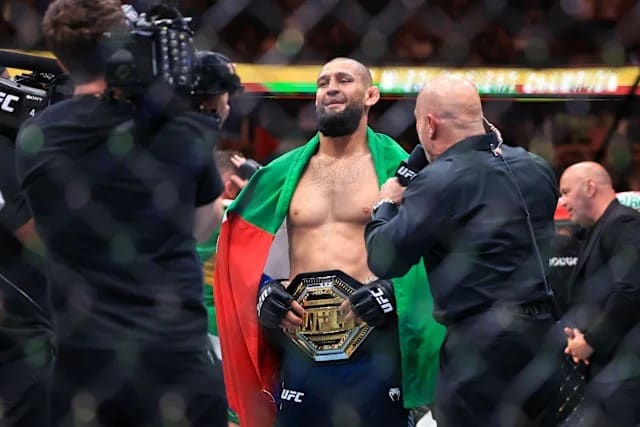
Chechen Roots and a Wrestling Legacy
Khamzat Khizarovich Chimaev was born on May 1, 1994, in Gvardeyskoye, Chechnya, into a modest family rooted in strong cultural values. He began wrestling at the age of five and quickly showed exceptional talent. His amateur wrestling career peaked with a bronze medal at the Russian national championships.
In 2013, at 18 years old, Chimaev moved to Sweden, where he reunited with his mother and continued competing in freestyle wrestling. He would eventually become a three-time Swedish national champion and establish himself as one of Europe’s most dominant grapplers outside the international spotlight.
Sweeping the Swedish Wrestling Scene
Chimaev dominated the Swedish wrestling circuit across multiple weight classes and even defeated future UFC middleweight contender Jack Hermansson in a wrestling match, further proving that his grappling translated at the elite level long before entering MMA.
His explosive style, relentless pressure, and chain wrestling soon became the foundation for what fans would later see inside the UFC Octagon.
The MMA Spark
Inspired by Conor McGregor’s rise and the massive global attention surrounding MMA, Chimaev transitioned fully into the sport around 2017. Training out of Stockholm’s Allstars Training Center, he rapidly developed into a terrifying prospect with devastating wrestling and finishing ability.
His UFC debut run in 2020 instantly made headlines. Chimaev won two fights in just 10 days, barely absorbing any damage while completely rag-dolling his opponents. Dana White quickly labeled him one of the most exciting prospects the UFC had ever seen.
Forging a Ground Game with Alan “Finfou” Nascimento
At Allstars, Chimaev began working closely with elite BJJ coach and multiple-time world champion Alan “Finfou” Nascimento.
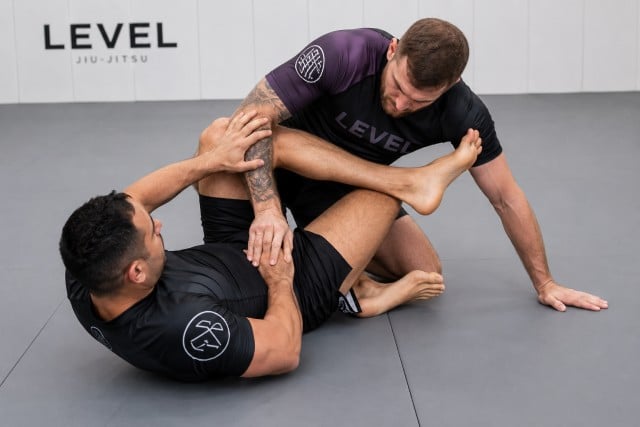
While Chimaev already possessed world-class wrestling, Finfou helped refine the technical details of his submission game, positional control, and transitions. According to Finfou, Chimaev approached every training session like a championship match, often insisting on intense gi training even while preparing for MMA fights.
In 2020, Chimaev earned his blue belt in Brazilian Jiu-Jitsu. After his war with Gilbert Burns at UFC 273, he was promoted to purple belt.
Following his dominant title-winning performance against Dricus Du Plessis at UFC 319, Finfou awarded Chimaev his black belt in one of the most emotional moments of his career.
Wrestling Meets BJJ in the Octagon
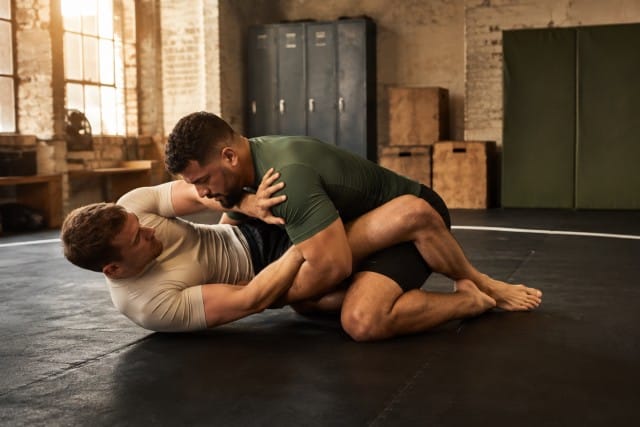
What separates Chimaev from many wrestlers transitioning to MMA is how seamlessly he combines wrestling pressure with modern submission grappling concepts.
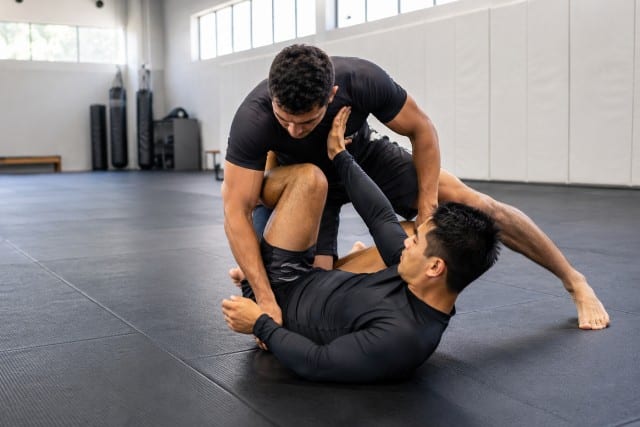
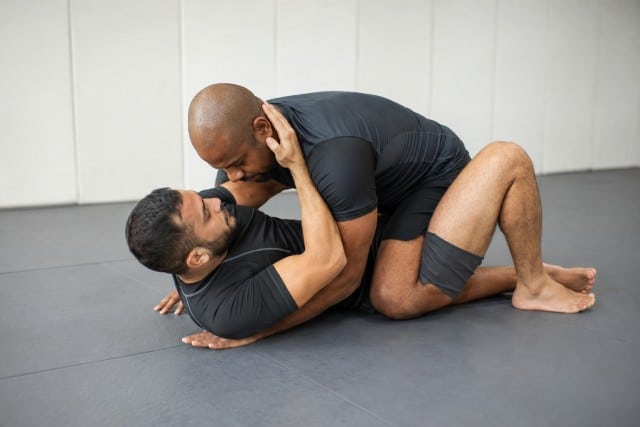
His game is built around relentless takedowns, chest-to-chest pressure, back control, and suffocating positional dominance. Instead of simply holding opponents down, Chimaev constantly advances position while threatening submissions and ground-and-pound.
This hybrid approach was fully displayed during his championship-winning performance against Dricus Du Plessis at UFC 319, where he repeatedly controlled the fight on the ground and neutralized one of the division’s toughest fighters.
Mighty Mouse did an interesting breakdown of the DDP fight, where he goes into detail about Khamzat’s style.
UFC 328: Sean Strickland Hands Chimaev His First Loss
At UFC 328 in Newark, New Jersey, Chimaev entered the Octagon as undefeated UFC Middleweight Champion and a heavy betting favorite against former champion Sean Strickland.
What followed was one of the biggest surprises of the year.
Strickland weathered Chimaev’s early grappling attacks, defended several key takedowns late in the fight, and slowly took over the striking exchanges with his trademark jab and pressure. After five hard rounds, Strickland reclaimed the UFC middleweight title via split decision.
The loss marked the first defeat of Chimaev’s professional MMA career.
Despite the heated build-up—which included chaotic press conferences and heavy security during fight week—both fighters showed respect afterward. In a classy moment, Chimaev personally wrapped the championship belt around Strickland’s waist after the decision was announced.
Dana White later revealed that he had the fight tied 2-2 heading into the fifth round, showing just how close the contest really was.
Could a Move to Light Heavyweight Be Next?
Following the loss, reports emerged that Chimaev told Dana White he is considering moving up to the light heavyweight division.
Many fans and analysts have long speculated that Chimaev’s difficult weight cuts at middleweight and welterweight were affecting his cardio and durability late in fights. After UFC 328, the discussion intensified even more.
A move to 205 pounds could open fascinating matchups against fighters like Alex Pereira, Magomed Ankalaev, or Jiří Procházka, while also potentially allowing Chimaev to compete without brutal weight cuts.
Gordon Ryan’s Thoughts on Khamzat’s Grappling Style
After Chimaev’s dominant championship win over Dricus Du Plessis at UFC 319, Gordon Ryan praised the grappling systems being used by Chimaev and his team.
Ryan highlighted Chimaev’s ability to maintain control both chest-to-chest and chest-to-back, arguing that modern wrestling-based scrimmage systems are becoming more effective for MMA than traditional Jiu-Jitsu approaches.
Part of Gordon’s statement read:
“A true master class of control from both chest-to-chest and chest-to-back positions. The system that these guys are using is putting the classical Jiu-Jitsu systems to shame…”
Ryan has long advocated for scrimmage wrestling and believes ADCC-style grappling translates better to fighting than many traditional BJJ systems.
Please read the full post on Gordon’s Instagram or head over to BJJ Fanatics to check out his latest scrimmage wrestling instructional.
What Makes Khamzat So Dangerous?
Even after the loss to Strickland, Chimaev remains one of the most dangerous fighters in MMA.
Few athletes combine:
- Elite freestyle wrestling
- Explosive athleticism
- Relentless pace
- Submission awareness
- High-level positional control
His ability to instantly transition from takedowns to dominant grappling positions continues to make him a nightmare matchup for almost anyone in the UFC.
At just 32 years old, Chimaev still appears to be entering the prime years of his career.
Summary
Khamzat Chimaev’s rise from the wrestling mats of Chechnya to UFC superstardom has been one of MMA’s most compelling stories. His evolution under Alan “Finfou” Nascimento transformed him from a dominant wrestler into a complete grappler capable of controlling elite fighters at the highest level.
Although UFC 328 handed him the first loss of his professional career, it may also mark the beginning of a new chapter. Whether he pursues an immediate rematch with Sean Strickland or moves up to light heavyweight, Chimaev remains one of the most fascinating athletes in combat sports today.