Your BJJ Guide
Master BJJ – One Position at a Time
  • Articles
  • Instructionals
    • BJJ Instructionals
    • Gordon Ryan Instructionals
    • John Danaher Instructional
    • Best Instructionals for Beginners
    • The Best Instructionals Older Grapplers
  • GI & Gear
    • BJJ GIs Under $100
    • Gi Brand List
    • How to Wash and Care for Your BJJ Gear
    • IBJJF Gi Requirements
    • Japanese Gi Brands
  • Learn BJJ
    • 3 Ways to Learn BJJ
    • BJJ for Beginners
    • Concepts vs System-Based
    • Ecological Approach
    • How Your Brain Learns BJJ
    • Learn BJJ at Home
  • BJJ Near Me
  • Injury Guides
    • BJJ Recovery
    • Most Common BJJ Injuries
    • Avoiding Cauliflower Ear BJJ
    • Jiu Jitsu Knee Injuries
  • About
  • Search

How to Design Your Own Positional Games in BJJ

How to Design Your Own Positional Games in BJJ

Positional sparring has long been a staple in Brazilian Jiu-Jitsu training — a way to isolate and refine specific parts of your game. But if you want to make your training even more effective, fun, and tailored to your needs, learning how to design your positional games using ecological principles is a powerful tool.

Creating structured, constraint-led environments enables you to improve more quickly, think more critically, and develop adaptable skills, rather than just memorizing moves.

In the previous article, we learned why the ecological approach works. This article will explain the key principles of designing your games and give you actionable examples you can use today.


What Are Positional Games?

A positional game is a focused training drill in which partners operate within a specific position or scenario, often with clearly defined goals and limitations. These games allow you to train in a live but limited environment where skill acquisition can happen faster.

Unlike traditional drilling or rolling:

  • You’re not repeating steps.
  • You’re not starting from neutral.
  • You’re training for depth and decision-making within a slice of jiu-jitsu

Why Design Your Own Games?

Designing your games allows you to:

  • Target your weak spots with intention
  • Improve skills through real-time problem-solving
  • Make training more engaging and purposeful
  • Develop your style, not just copy others

Whether you’re a hobbyist, competitor, or coach, this lets you take control of your development. To get a deeper understanding, read our article: The science behind learning faster through play.


How to Design a BJJ Positional Game
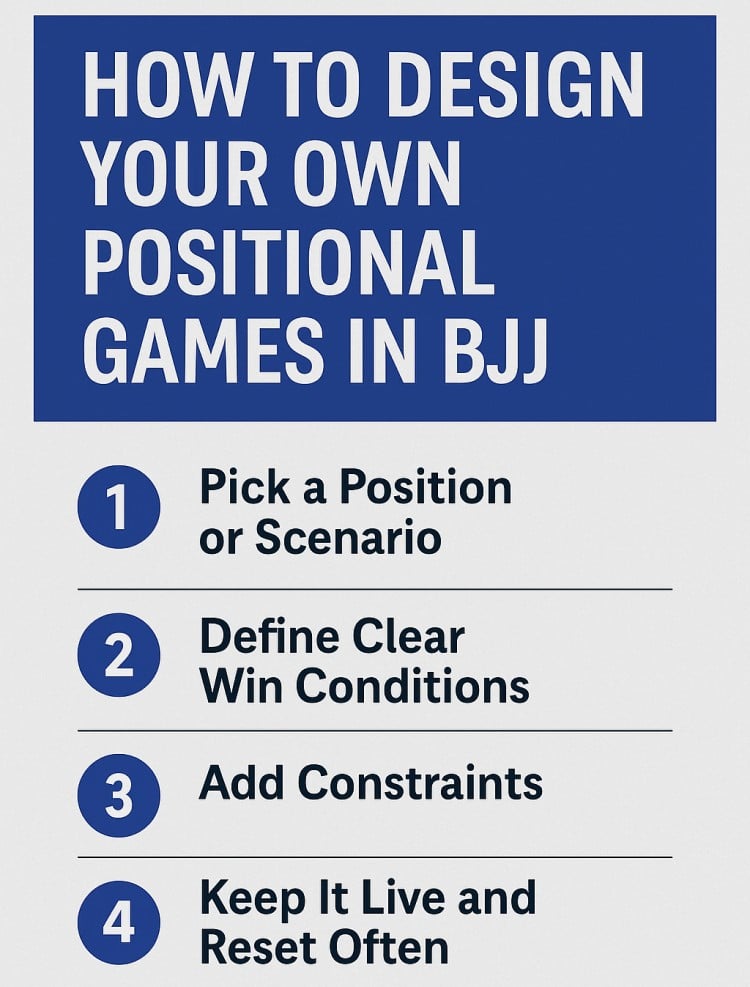
the steps to design your own bjj games

1. Pick a Position or Scenario

Select a situation that you would like to develop. Examples include:

  • Guard retention against a knee slice
  • Mount escapes
  • Back control maintenance
  • Standing grip fights

Keep it specific and relevant to your current goals.

2. Define Clear Win Conditions

Both players need goals to give the game direction. For example:

Mount Escape Game

  • Bottom wins by regaining guard or getting to half guard
  • Top wins by maintaining mount for 20 seconds or submitting

This encourages urgency and problem-solving.

3. Add Constraints

Constraints are limits that shape behavior. Use them to:

  • Remove tools (e.g., “pass without grips”)
  • Add urgency (e.g., “score in 30 seconds”)
  • Emphasize habits (e.g., “no submissions, only control”)

Constraints force you to adapt and develop better movement options.

4. Keep It Live and Reset Often

Games should be played at realistic intensity with resistance. After each exchange:

  • Reset quickly
  • Switch roles (or partners)
  • Reflect and repeat

You want many decision-making reps in a short period.

5. Modify As You Go

The beauty of designing games lies in their flexibility. If something feels too easy, too chaotic, or too slow:

  • Change the rules
  • Add or remove space
  • Swap grips, timers, or movement limitations

You’re in control. Let your creativity guide learning.


Sample Positional Game: Turtle vs. Back Take

  • Start with one player in turtle, other behind (hands on hips)
  • Attacker wins by taking the back or rolling them to side control
  • Defender wins by escaping to guard or standing
  • Constraint: attacker can’t jump hooks in immediately

This develops balance, hand fighting, and awareness — without needing to “learn” a technique first.


Final Tips for Better Games

  • Start simple, then add complexity
  • Use a timer (1–3 minutes per round)
  • Film and review key moments for insight
  • Pair up with someone at a similar level for balanced learning

Final Thoughts

Designing your positional games makes your jiu-jitsu more intentional, dynamic, and personal. Instead of just following a curriculum, you create learning environments that evolve with your game, helping you grow faster.

So next time you hit the mats, don’t just roll or drill. Set up a game, add constraints, and train like a problem-solver.

For a quick start, check out five ecological games to start with.

More in the Ecological Approach

  • The Ecological Approach to Learning BJJ
    How to learn using this method.
  • Why BJJ Isn’t About Memorizing Techniques
    How the brain works and why this approach can be an effective learning method.
How Your Brain Learns BJJ

Why BJJ Isn’t About Memorizing Moves

Why BJJ Isn’t About Memorizing Moves

At some point in every Brazilian Jiu-Jitsu journey, a student hits a frustrating wall:
“I’ve learned dozens of techniques… but I still get smashed during sparring.”
The issue isn’t your work ethic or attention to detail — it’s the learning model itself.

Jiu-Jitsu isn’t about collecting techniques. It’s about building adaptable skills. And that requires much more than memorizing sequences from instructionals. It requires experiencing problems, making decisions, and learning in the same chaotic environment where you’ll use your skills: under pressure, with resistance, and in real time.

The Problem With Memorizing Moves

Traditional learning in BJJ — and many online instructionals — teach jiu-jitsu like a catalog of “solutions”:

  • Technique A for problem X
  • Technique B for problem Y
  • Step 1, 2, 3… now drill it

While this structure helps instructors organize material, it can mislead learners. In live rolls, you rarely encounter problems that look like textbook scenarios. Opponents resist, timing changes. Angles shift. What worked in drilling often collapses under pressure.

That’s because memorized moves don’t equal adaptable skill. Performance depends on recognition, timing, and decision-making, not just recall.


Learning from Instructionals: The Pros and Cons

The Good:

  • High-level instruction from world-class athletes
  • Helpful for visual learners and detailed technicians
  • Great reference when you want to explore specific positions

The Limitations:

  • Often lack live resistance context
  • Easy to binge-watch without retention
  • Emphasize what to do, not how to perceive or adapt
  • May lead to “technique collector” syndrome — knowing a lot, applying little

Instructionals are valuable tools, but they’re like a cookbook: having recipes doesn’t make you a chef. You must train under pressure to develop your instincts and skills.


Ecological Learning: How Humans Naturally Acquire Skill

In contrast, the ecological approach to BJJ views learning as a process of exploration, adaptation, and real-time decision-making. Rather than memorizing techniques, students solve movement problems in live environments — using constraint-led games and goal-based scenarios.

Here’s what ecological training looks like:

  • A coach sets a problem (e.g., “pass the guard using underhooks only”)
  • Players explore solutions under resistance
  • The brain learns by matching perception with action over many reps

This style mirrors how we learn in nature: by doing, failing, adjusting, and refining.


Why This Matters for Your Progress

Memorization might make you feel like you’re learning, and watching instructional videos is certainly enjoyable, but it can create a false sense of mastery. You might “know” 50 techniques but struggle to apply even one under stress.

Ecological learning skips this problem entirely. You’re always learning in the environment that mirrors sparring, so when it’s time to roll or compete, your body and brain already know what to do. Not because you memorized, but because you’ve trained to perceive, react, and adjust.


Final Thoughts

BJJ isn’t a language to memorize — it’s a problem to solve in motion.

The more you treat jiu-jitsu as a living, moving system instead of a static playbook, the faster you’ll improve. Instructionals have their place, but real progress comes when you stop trying to copy and start learning through exploration.

Don’t just collect techniques. Train your decision-making. Trust your instincts. And build the kind of jiu-jitsu that works — not in theory, but in motion.

If you’re interested in trying this approach to training, a great way to start is with five ecological BJJ games that we’ve selected.

Related Reading

  • Best Brazilian Jiu Jitsu Instructionals
    The top BJJ videos to learn from
  • Turning Drills into Learning Games
    Science behind learning
  • Beginner Games
    Get started with these games

How Your Brain Learns BJJ

Ecological BJJ Can Accelerate Your Progress

Why the Ecological Approach to Learning BJJ Can Accelerate Your Progress

In Brazilian Jiu-Jitsu (BJJ), many students spend years drilling techniques, only to struggle to apply them under pressure. If you’ve ever felt like your learning disappears the moment resistance kicks in, you’re not alone — and you’re not learning wrong. You’re likely learning unnaturally.
That’s where the ecological approach to skill development comes in. Rooted in neuroscience and motor learning theory, this training method mirrors how our brains naturally acquire complex skills. It’s practical, intuitive, and it can radically speed up your jiu-jitsu development.


What Is the Ecological Approach?

The ecological approach to learning emphasizes learning through interaction with one’s environment. Instead of memorizing techniques in a static, idealized form, you develop skills by solving real movement problems, under real conditions, with real resistance.
This method is driven by ecological dynamics concepts, which study how the brain, body, and environment interact during learning. In BJJ, that means:

  • No step-by-step repetition
  • No “perfect technique”
  • Just purposeful, constraint-led problem solving

Think of it this way: instead of being told what to do, you’re placed in situations where your brain figures out what works — and that difference is everything.


How Your Brain Learns

Contrary to the old-school idea of “input → store → retrieve,” modern neuroscience shows that learning isn’t about memorizing and reproducing exact movements. It’s about perceiving opportunities for action (“affordances”) and adapting in real time.
Here’s how it works:

  1. Perception: Your nervous system picks up on key visual, tactile, and spatial cues, like your opponent’s weight shift or limb position.
  2. Action: You attempt a movement based on those cues.
  3. Feedback: The outcome (success or failure) shapes your next attempt.
  4. Adaptation: Your brain updates its internal model, refining your timing and movement.

This feedback loop, known as perception-action coupling, forms the foundation of skill development. The more reps you get within this loop, the faster and deeper you learn. The ecological approach maximizes this loop with every repetition.

Read our more in-depth research into how the Brain Learns Brazilian Jiu Jitsu.


Why It Speeds Up Learning

1. You Learn in Context

Instead of drilling in isolation, you learn within the environment where the skill is applied; under resistance, pressure, and unpredictability. That makes skill transfer to sparring almost immediate.

2. You Develop Adaptability

You don’t just memorize “the armbar.” You learn how to armbar different people in different positions and ways. This builds flexible, robust skills — the kind that work even when things aren’t perfect.

3. You Build Intuition, Not Dependence

Ecological learning trains your nervous system to respond instinctively, not search for a technique in your memory bank. You become fluent in grappling, not just literate.

4. You Reduce Cognitive Overload

Trying to remember sequences during sparring slows you down. The ecological approach offloads memory and builds reaction patterns that are faster, more natural, and neurologically efficient.


Evidence from Science & Sports

Research in motor learning and elite sports shows that athletes trained with ecological and constraints-led approaches:

  • Perform better under pressure
  • Retain skills longer
  • Adapt quicker to new opponents
  • Make faster decisions in complex environments

These are precisely the outcomes BJJ practitioners want, especially in live rolling or competition.


Practical Example in BJJ

Let’s say you want to get better at passing guard.
Instead of drilling a toreando pass 100 times, the ecological method would have you:

  • Play a game where your partner tries to retain open guard while you try to pass
  • Use constraints like “no grips” or “pass only on one side”
  • Discover when to step in, when to retreat, and how to angle your body to pass

This develops not just one pass, but a passing skillset — built through real-time problem solving.


The Shift: From Technique Collector to Problem Solver

Traditional drilling creates technique collectors — people who know 100 moves but struggle to use them.
The ecological approach cultivates problem solvers who can adapt and apply their knowledge in complex, real-world scenarios.
Which would you rather be?


Final Thoughts

The ecological approach isn’t just a different way to train — it’s a return to how we’re wired to learn. From childhood play to elite-level sport, the most powerful learning comes from real engagement, not rote repetition.

By understanding that BJJ isn’t about only memorizing moves and starting training in situations that mirror the chaos and creativity of live rolling, your brain becomes more attuned, your reactions more precise, and your game more effective, in less time.
Stop memorizing. Start adapting. That’s how you truly learn jiu-jitsu.

Learn 5 Ecological BJJ Games to start with.

Related Reading

  • Games Beginners Can Start With
    Four ecological games
  • Best Brazilian Jiu Jitsu Instructionals
    The top BJJ videos to learn from

BJJ Concepts vs System-Based Instructionals

5 Ecological BJJ Games to Boost Your Skill Faster

5 Ecological BJJ Games to Boost Your Skill Faster

The ecological approach to learning Brazilian Jiu-Jitsu involves solving movement problems in realistic, live environments. Instead of memorizing moves, participants engage in games with clear goals, specific constraints, and real resistance.

This kind of training builds timing, awareness, adaptability, and creativity faster than traditional drills.

In this article, you’ll learn five ecological BJJ games you can play with a partner to supercharge your learning. They’re simple to set up, easy to modify, and fun at every level.

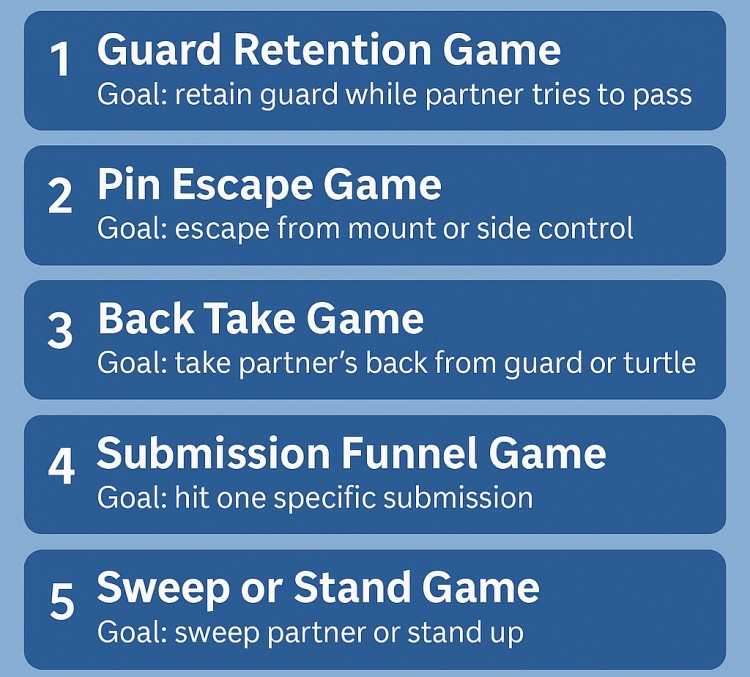
list of five ecological games to improve your BJJ


1. Guard Retention Game

Goal: The bottom player tries to retain guard while the top player tries to pass.

How It Works:

  • Start with the bottom player in open guard (any type).
  • Top player attempts to pass using any method.
  • Bottom player cannot sweep or submit — only retain or recover guard.

Constraints:

  • Bottom player can’t close guard.
  • Top player must stay engaged — no disengaging completely.

Why It Works: The bottom player must explore guard retention concepts like framing, hip escapes, and angle recovery under pressure. Learn more about why play-based learning improves skill retention.


2. Pin Escape Game

Goal: Escape from mount or side control using any method.

How It Works:

  • One player starts on bottom, fully pinned.
  • Top player maintains control but doesn’t submit.
  • Bottom player wins by regaining guard, turtle, or standing up.

Constraints:

  • No submissions.
  • Bottom must stay safe (no turning and giving back carelessly).

Why It Works: Builds composure, framing skills, and body mechanics for escaping tight control — all under live, adaptive pressure.


3. Back Take Game

Goal: Bottom player tries to take the back from guard or turtle.

How It Works:

  • Start in closed guard, seated guard, or turtle.
  • Bottom player wins by achieving back control.
  • Top player defends but doesn’t try to submit.

Constraints:

  • No submissions.
  • Optional: limit grips to force creative entries.

Why It Works: Develops sensitivity to posture, angle creation, and transitional awareness — especially useful for sweeps-to-back transitions.


4. Submission Funnel Game

Goal: Hit one specific submission (e.g., armbar from mount).

How It Works:

  • Both players start in a specific position (like mount or guard).
  • One player can only win with a specific submission.
  • Other player tries to escape or reverse.

Constraints:

  • Submissions are limited to one target (e.g., only triangle, only kimura).
  • Optional: attacker gets 1-minute rounds for urgency.

Why It Works: Forces you to develop a deeper, multi-layered attack sequence around one move — great for building funnels.


5. Sweep or Stand Game

Goal: Bottom player must sweep or stand up; top player must pass.

How It Works:

  • Start in any open guard.
  • Bottom player scores by hitting a clean sweep or standing to disengage.
  • Top player scores by achieving a pass.

Constraints:

  • No submissions allowed.
  • Reset after each “score.”

Why It Works: This game trains real decision-making under pressure: when to wrestle up, when to sweep, and how to manage distance.


Tips for Success

  • Start with moderate resistance and increase intensity gradually.
  • Use a timer (1–3 minutes per round) for structure.
  • Switch partners often to test adaptability.
  • Add or remove constraints based on skill level.

✅ Final Thoughts

Games like these are the heart of the ecological approach to BJJ — they mimic real rolling but sharpen specific skills through innovative design. You don’t need to memorize a hundred techniques to get better. You need the correct problems to solve.

Start with one or two games per class or open mat. You’ll be amazed how quickly your awareness, timing, and confidence evolve.

To learn more, please read our article, Why Can the Ecological BJJ Approach Speed Up Your Progress?

Related Reading

  • Concepts vs System Based
    Learn the science behind learning
  • Best Brazilian Jiu Jitsu Instructionals
    The top BJJ videos to learn from
  • Design Your Own BJJ Games
    This article teaches you how to design games

How to Learn BJJ with the Ecological Approach

How to Learn BJJ with the Ecological Approach

Brazilian Jiu-Jitsu (BJJ) has traditionally been taught through static drills, repetition of techniques, and instructor-led sequences. However, in recent years, more coaches and athletes are adopting a new, more adaptive training philosophy: the ecological approach.

Rather than memorizing moves, this method focuses on developing skill through interaction with your environment — using games, constraints, and real-time problem-solving. It’s dynamic, messy, and more like how humans learn.

In this guide, we’ll explain the ecological approach, how it differs from the traditional way of learning BJJ, and how to use it to improve your jiu-jitsu.


What Is the Ecological Approach?

The ecological approach to learning is based on ecological dynamics, a theory from motor learning and sport science. It views skill development as an interaction between:

  • The individual (your body, experience, and mindset)
  • The task (what you’re trying to accomplish)
  • The environment (your training partners, mat space, rules)

In BJJ, this means learning not by copying techniques, but by solving problems in real-time, adapting to resistance, and exploring different ways to achieve a goal, such as escaping side control or passing guard.

This approach is often referred to as “learning through live situations” or “constraints-based coaching.”

To dive deeper into the brain process, you can learn more with our article, Why the Ecological BJJ training can help your progress.


How It Looks in Practice

1. Design Live Games, Not Static Drills

Instead of practicing the same sweep 20 times, create a live game:

“You’re in closed guard. Your partner tries to posture up and open your guard. You win by off-balancing and sweeping them. They win by breaking open the guard and standing.”

This setup forces you to develop real timing, grips, and feel — not a rote sequence.

2. Use Constraints to Shape Learning

A constraint is anything that nudges your behavior. For example:

  • “You can only use one arm to pass.”
  • “No grips allowed. You must sweep by using hooks only.”
  • “Your goal is to take the back in under 30 seconds.”

These challenges make you more creative and help you discover what works under pressure.

3. Encourage Problem Solving

Instead of saying “Do this grip and then this pass,” a coach might say:

“Try to get around their legs. What’s stopping you? What happens if you drop your level?”

This builds awareness and adaptive thinking, rather than dependency on step-by-step instruction.


Benefits of the Ecological Approach

  • Faster skill transfer to live rolling
  • Greater retention of movement patterns
  • Better adaptability against different body types and styles
  • A deeper understanding of timing, leverage, and control
  • More fun and engaging training for most students

It benefits hobbyists, competitors, and anyone interested in functional performance over aesthetic perfection.


Tips to Get Started

  • ✅ Add small games to your warm-ups (e.g., guard retention mini-matches)
  • ✅ Ask your coach about incorporating constraint-led drills
  • ✅ Focus on goals and reactions, not copying
  • ✅ Film and review situational rolls to analyze your movement decisions
  • ✅ Be patient — this method can feel “slower” at first, but leads to deeper learning

Pros and Cons

Here’s a clear breakdown of the pros and cons of using the ecological approach to learning Brazilian Jiu-Jitsu:

– Pros

1. Better Skill Transfer to Rolling
Because you’re always training in context with resistance, the skills developed carry over directly into live sparring and competition.

2. Improved Adaptability
You learn to respond to different body types, styles, and reactions instead of relying on memorized sequences that may break down under pressure.

3. Deeper Understanding of Movement and Timing
The approach forces you to feel and understand leverage, balance, and timing—core aspects of BJJ that can’t be taught through static drilling.

4. Increased Engagement and Enjoyment
Games and problem-solving drills are often more fun and mentally stimulating than repetitive drilling, keeping practitioners more motivated.

5. Builds Autonomy and Creativity
Students improve at solving problems independently rather than waiting for prescriptive answers or set techniques.

– Cons

1. Slower Initial Progression
Without step-by-step guidance, beginners may feel lost or frustrated early on and may take longer to “see” results.

2. Less Structure Can Be Confusing
Some students struggle to grasp key mechanics without a precise technical sequence unless the coach is skilled at designing constraints.

3. Harder to Teach in Large Classes
Managing a class full of students doing different games or exploratory drills can be more challenging than synchronized techniques.

4. Limited Reference for Visual Learners
Some students learn best by watching and copying — this method deprioritizes that, which might not suit everyone’s learning style.

5. Requires Coach Experience and Creativity
The success of the ecological approach depends heavily on the coach’s ability to design purposeful, targeted training environments.


Final Thoughts

Learning BJJ with the ecological approach means trading perfection for progress. It shifts the focus from “doing the move right” to “solving the problem effectively.” By placing yourself in realistic situations and exploring options under resistance, your jiu-jitsu becomes sharper, more reactive, and more robust.

Whether you’re a white or black belt, this approach aligns more closely with how combat works — and how humans naturally learn to move.

Five ecological BJJ games to start with

Related Reading

  • Best Brazilian Jiu Jitsu Instructionals
    The top BJJ videos to learn from
  • Why BJJ isn’t about Memorizing Moves
    We dive deeper into how to learn BJJ
  • Constraint-Led Guard Passing Games
    CLG Games to level up your passing

How Your Brain Learns BJJ

Best Instructional Videos for Escapes and Survival

Best Instructional Videos for Escapes and Survival

If there’s one area of Brazilian Jiu-Jitsu that almost every grappler struggles with, especially beginners, it’s escaping bad positions. Mount. Side control. Back mount. Turtle. These are all places where survival feels impossible, especially against heavier, more experienced training partners.

But escapes aren’t just about brute strength or explosive movement — they’re about timing, leverage, and technical understanding. And the good news? Some of the best minds in BJJ have created world-class instructionals to help you master these essential skills.

In this roundup, we break down the best BJJ instructionals for escapes and survival, covering both gi and no-gi, beginner to advanced. If you want to stop getting smashed, start here.

Affiliate Disclosure: This post contains affiliate links. If you purchase them, I may earn a commission at no extra cost to you.


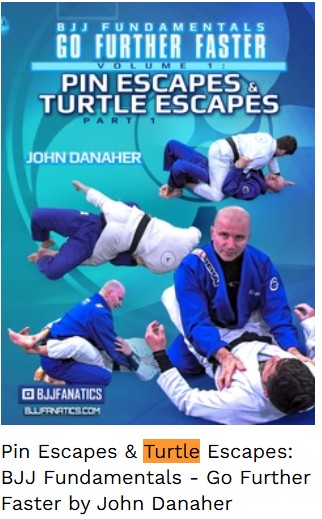
1. Pin Escapes & Turtle Escapes – John Danaher

Best for: Beginners to advanced students wanting a complete escape system

Overview:
This instructional is the most comprehensive and methodical approach to escaping dominant positions. Danaher breaks down the mechanics of framing, bridging, elbow-knee connections, and turning escapes into strategic layers of survival.

  • Covers mount, side control, north-south, and turtle escapes
  • Heavy on conceptual learning and mechanics
  • Perfect if you get stuck under pressure often

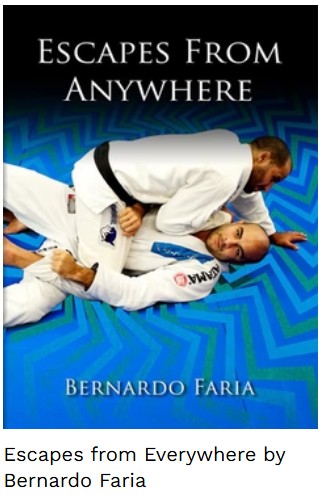
2. Escapes from Anywhere – Bernardo Faria

Best for: Beginners learning to escape armbars, triangles, and chokes

Bernado Escapes

Overview:
Bernardo Faria, a 5x world champion, is known for his accessible, beginner-friendly style. This instructional is all about escaping submission attempts with simple mechanics that work even if you’re not athletic.

  • Armbar escapes
  • Triangle defenses
  • Guillotine, rear naked choke, and kimura counters

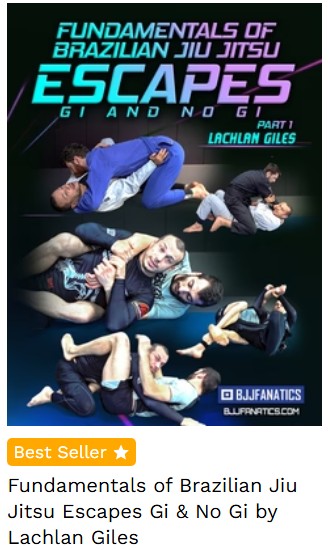
3. Escapes – Lachlan Giles

Best for: Students who struggle escaping controls

Overview:
Getting stuck with hooks in and a seatbelt around your torso is a nightmare. Lachlan Giles’ back escape system teaches you to peel grips, clear hooks, and turn into your opponent efficiently.

  • Systematic approach to escaping one of BJJ’s most dominant positions
  • Clear, step-by-step instructional style
  • Includes both gi and no-gi applications

Why Focus on Escapes?

  • You will end up in bad positions, even with good defense
  • Escapes keep you in the fight and let you recover to neutral or attack
  • Mastering escapes increases your confidence during sparring and competition

If your BJJ feels like it’s built on “hope” when you’re on bottom, these instructionals will give you the tools to regain control and stop panicking under pressure.


Final Recommendation: Where Should You Start?

  • New to escapes? Start with Pin Escapes by John Danaher or Submission Escapes by Bernardo Faria
  • Want a minimalist approach? Go with Priit Mihkelson’s Survive the Tight Pin
  • Struggle with back control? Try Lachlan Giles’ Back Escapes
  • Prefer traditional style? Fabio Gurgel offers clean, efficient basics

Visit BJJ Fanatics Now

More Reading For You

  • Best BJJ Instructional in 2025

Gordon Ryan Instructionals: Beginner to Advanced

Gordon Ryan Instructionals: Beginner to Advanced

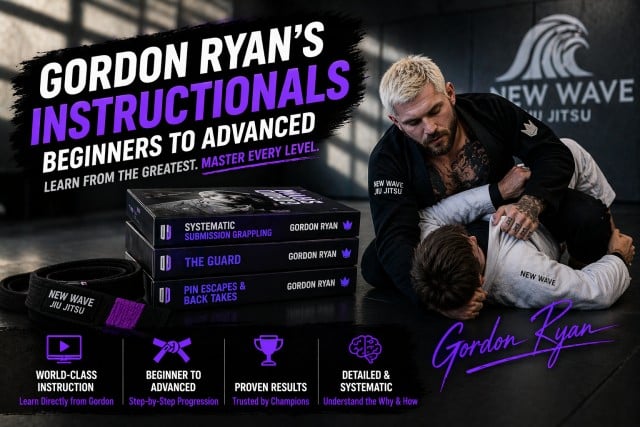
Gordon Ryan beginner to advanced instructional

Gordon Ryan is widely regarded as the greatest no-gi grappler of all time. His instructionals on BJJ Fanatics are more than just popular—they’ve become essential study material for anyone serious about building a modern, systematic jiu-jitsu game.

But with over a dozen high-level BJJ instructionals available, one question always comes up:

Where should you start?

This guide ranks Gordon Ryan’s top instructionals—from beginner-friendly foundations to advanced competitive systems—so you can build your game step by step with confidence.

Affiliate Disclaimer: This review contains affiliate links. If you purchase through them, I may earn a commission at no extra cost. Thank you for supporting the site!


Why Learn from Gordon Ryan?

When it comes to teaching, Gordon is known for precision and clarity. His instructionals are designed to give you a **complete system**, not just a collection of random techniques. They’re ideal if you:

  • Want to understand the underlying mechanics of positions
  • Prefer structured, long-form learning over quick tips
  • Value control, pressure, and step-by-step dominance

While his content is best suited for intermediate and advanced grapplers, motivated beginners can also make huge progress by starting with his most accessible courses.


Best Gordon Ryan Instructionals (Ranked)

Here’s the progression we recommend, moving from core fundamentals to advanced systems.

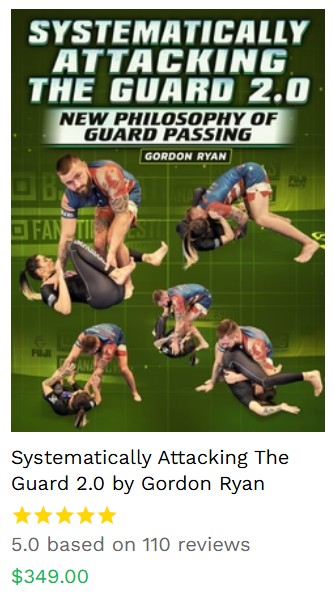
1. Systematically Attacking the Guard

Best for: Beginners and intermediates developing strong passing fundamentals attacking the guard by gordon

Why it’s a great starting point:
This series lays out Gordon’s signature passing framework with concepts like inside positioning, distance control, and knee-cut mechanics. Perfect for anyone who wants to understand how to break down guard systematically.

  • Clear, step-by-step breakdowns
  • Focus on positional advancement
  • Excellent first course for new students

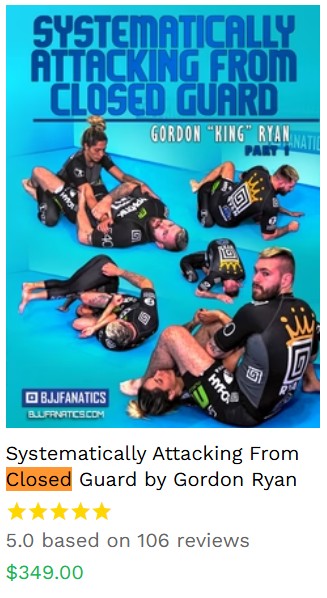
2. The System: Closed Guard

Best for: Beginners with some experience in guard closed guard by gordon ryan

Why it’s effective:
Closed guard remains one of the most reliable positions in BJJ. Gordon shows how to use it not just to hold but to attack, with high-percentage submissions and back takes.

  • Practical for white and blue belts
  • Emphasizes posture control and grips
  • Builds a submission-oriented guard game

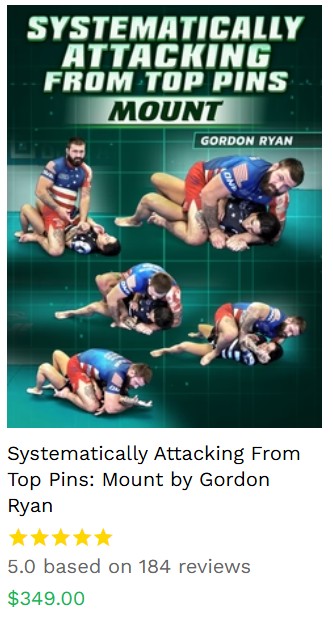
3. Systematically Attacking from Mount

Best for: Intermediates developing top-pressure dominance attacking from top pins by gordon ryan

Why it stands out:
Mount is a fight-ending position in Gordon’s system. This instructional shows how to maintain crushing pressure while isolating arms and applying submissions.

  • Teaches chest-to-chest control
  • Explains transitions to armbars and triangles
  • Perfect for building confidence in finishing from mount

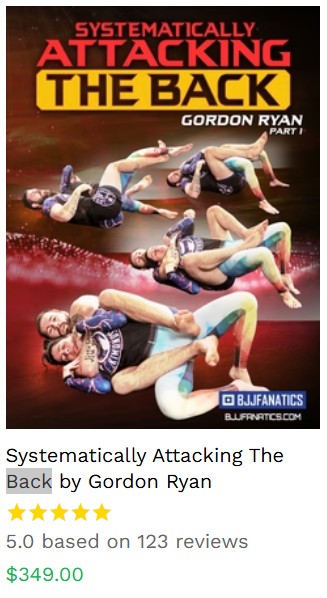
4. Systematically Attacking the Back

Best for: Intermediate to advanced players attacking the back by gordon

Why it’s legendary:
Arguably Gordon’s most acclaimed instructional. He covers diagonal control, hand fighting, and submission chains—giving you the blueprint for turning back control into the ultimate finishing position.

  • Emphasis on retention before submission
  • Techniques tested at the highest levels
  • Considered a must-watch for serious competitors

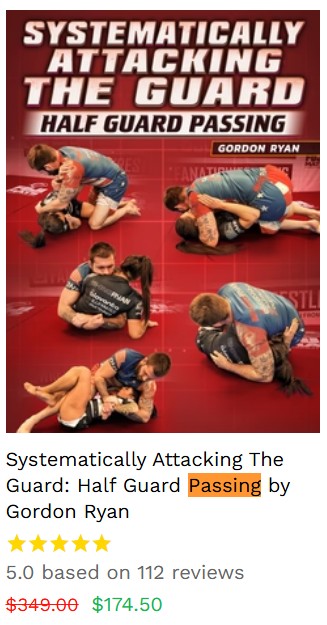
5. Passing the Half Guard

Best for: Intermediates learning to handle seated guards half guard passing

Why it’s valuable:
Seated and half guard positions dominate modern no-gi. This instructional gives you pressure-based strategies and knee-wedge mechanics to dismantle these guards.

  • Excellent for players who want a heavy top game
  • Teaches how to neutralize modern guards
  • Best applied by students with prior passing experience

6. The System: Leg Locks

Best for: Advanced grapplers

leg attacks by gordon

Why it’s famous:
The leg lock system that made Gordon and the Danaher team dominant at ADCC. Covers inside sankaku, ashi garami, and devastating finishing mechanics.

Important: This series is not suitable for beginners. A solid base in positional control and safety is required before diving into heel hooks and advanced entanglements.


Where Should You Begin?

If you’re just starting with Gordon Ryan’s material, Systematically Attacking the Guard is the best entry point. From there, work through closed guard, mount, and back control. Once your foundation is solid, move on to half guard passing and advanced leg lock systems.

Progression Path:

  • Beginner: Guard Passing, Closed Guard
  • Intermediate: Mount, Back Control, Half Guard Passing
  • Advanced: Leg Locks, Counter Wrestling, Open Guard Retention

Explore Gordon Ryan’s Instructionals


FAQ: Gordon Ryan Instructionals

What is the best Gordon Ryan instructional for beginners?

The best starting point is Systematically Attacking the Guard, since it explains core passing concepts and sets the stage for Gordon’s other systems.

Are Gordon Ryan instructionals worth it?

Yes. While they are detailed and lengthy, they offer comprehensive systems rather than random moves, making them some of the most valuable BJJ instructional videos available.

Do I need experience before watching?

Beginners can benefit, but most of Gordon’s content is designed for intermediate and advanced students. Starting with his passing and closed guard instructionals will make the material much easier to follow.

Which Gordon Ryan instructional is most advanced?

The Leg Lock System is the most advanced and should only be studied after a solid foundation in positional control has been established.


Recommended Reading

  • Scrimmage Lower Body Takedowns by Gordon Ryan
  • Best BJJ Instructionals for Beginners (2025 Edition)

How to Choose the Right BJJ Instructional for Your Game

How to Choose the Right BJJ Instructional for Your Game

Brazilian Jiu-Jitsu has exploded with educational resources in recent years, especially through platforms like BJJ Fanatics. With so many instructionals out there — from basic fundamentals to highly specialized techniques — the real challenge isn’t finding one, but choosing the right one for you.

The secret isn’t just buying what’s trending or what your favorite competitor released last month. Instead, the key is to select instructionals that align with your current stage of development, plug gaps in your game, and promote well-rounded growth. Here’s how.


1. Understand That You’re Building a Complete Game

Too often, practitioners think of BJJ as just a collection of techniques. But at its core, Jiu-Jitsu is about building a system — a cohesive, connected game where each movement leads logically to the next.

When choosing an instructional, ask yourself:

  • Will this help me build systems, not just memorize moves?
  • How does this fit into what I already do well?
  • Does it reinforce the kind of game I want to develop?

You’re not just downloading techniques; you’re laying bricks on top of a foundation. Your purchases should reflect long-term thinking, not just short-term excitement.


2. Identify the Gaps in Your Game

The biggest mistake beginners and intermediate grapplers make is training around their weaknesses. It’s fun to watch instructionals about techniques you already love. But real growth comes from addressing what you avoid.

To identify gaps:

  • Review your rolling footage or reflect on your sessions.
  • Ask yourself: Where do I consistently struggle?
  • Which positions do I avoid or feel uncomfortable in?

For example, if you love playing open guard but frequently get passed and struggle to recover, an instructional on guard retention might be more valuable than yet another guard attack series.

Or if you feel confident from top but freeze when you’re stuck under mount, it might be time to learn escapes and survival.


3. Don’t Just Feed Your A-Game

Building your “A-game” is important — especially if you’re a competitor — but overdeveloping your strengths can stunt your growth in the long run. Jiu-Jitsu is unpredictable. You won’t always get to your favorite position, and you’ll face opponents who neutralize your go-to strategies.

Instead, aim to become dangerous from every position.

A balanced BJJ athlete should have:

  • Good top pressure and passing
  • Solid guard retention and sweeps
  • Reliable escapes from bad positions
  • Submissions from multiple pathways

When choosing your next instructional, try to think like this:

“If I couldn’t get to my best position, how would I win?”

Choose instructionals that round you out, not just hype up what you’re already good at.


4. Consider Skill Level and Teaching Style

Not all instructionals are created equal — and not all of them are right for you at this moment.

Ask:

  • Is this for my current skill level?
  • Does the instructor explain concepts or just list techniques?
  • Is the system compatible with my body type or training style?

For example, John Danaher and Lachlan Giles are known for deep conceptual teaching, ideal for students who like to think. Gordon Ryan’s systems are precise and competition-focused. Bernardo Faria and Henry Akins offer beginner-friendly instructionals with smooth, basic movement that scales well.


5. Build with Intent, Not Impulse

Instead of randomly picking instructionals:

  • Create a learning plan (e.g., “Next 3 months: focus on escapes and pressure passing”)
  • Budget purchases based on holes in your game
  • Rewatch and apply before moving to the next topic

Watching instructionals passively is like reading cookbooks and never cooking. Choose one that aligns with your needs and watch it with intention.


Final Thoughts

Choosing the right BJJ instructional is less about hype and more about strategy. You’re building a personal Jiu-Jitsu blueprint — one that’s adaptable, balanced, and effective. That means filling in your blind spots, resisting the urge to only chase flashy techniques, and always aiming for well-rounded improvement.

Next time you’re browsing BJJFanatics.com or considering a new series, ask yourself: Is this helping me grow — or just entertaining me?

Choose wisely. Train smart. Roll better.

Recommended Reading For You

  • Best BJJ Instructionals
    Comparison of the top videos
  • Best Intructionals for Beginners
    Which videos should a beginners choose
  • « Previous Page
  • 1
  • …
  • 4
  • 5
  • 6
  • 7
  • 8
  • …
  • 10
  • Next Page »

BJJ Fanatics

BJJ Fanatics latest videos

BJJ Fanatics: The number one source on the internet with the best instructional videos and promotions.

Explore BJJ Fanatics Now

Scrimmage Takedowns

Gordon Scrimmage Lower-body takedowns

Gordon Ryan’s approach to scrimmage-based lower-body takedowns combines the precision of wrestling with the strategic timing of jiu-jitsu.

Explore Gordon’s Latest Video

Further Faster Bundle

Dahaner Go Further Faster Bundle

John Danaher Go Further Faster: Master the fundamentals with clarity and purpose—just like Danaher’s top students.

Further Faster Bundle Deal


Your BJJ Guide Copyright © 2026 ·

We use cookies to ensure that we give you the best experience on our website. If you continue to use this site we will assume that you are happy with it.