Constraint-Led Games That Build Better Guard Passing
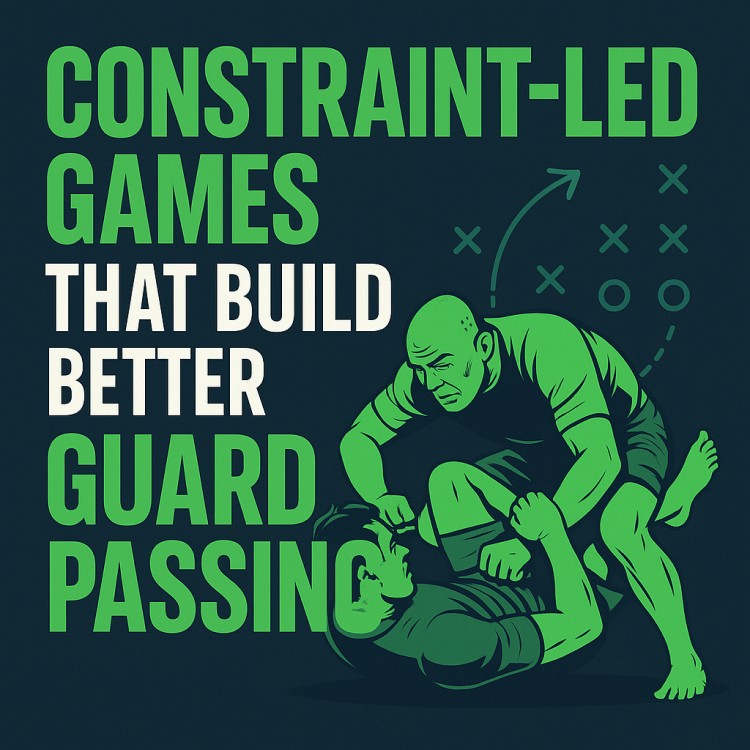
In the dynamic world of Brazilian Jiu-Jitsu, passing the guard is a challenging skill to master. Guard players have countless tools to retain, recover, and counter, meaning the passer must be technically proficient, adaptable, and composed under pressure. This is where constraint-led games (CLGs) come in: they provide a more targeted, engaging, and effective way to improve guard passing through real-time problem solving.
What Are Constraint-Led Games?
Constraint-led games are a coaching method rooted in motor learning theory. Rather than relying on static drilling or generalized sparring, CLGs create specific rules or environments that guide players toward certain outcomes. This ecological approach to learning BJJ encourages implicit learning, adaptation, and decision-making under pressure.
Instead of telling the athlete what to do, CLGs create scenarios that force the athlete to discover how to do it through experience.
Why Use CLGs for Guard Passing?
Traditional guard passing drills often fail to replicate a live opponent’s unpredictable, reactive nature. Constraint-led games bridge this gap by introducing:
- Task constraints (e.g., “passer may only use one arm”)
- Environmental constraints (e.g., limited mat space or wall boundaries)
- Rule constraints (e.g., “no grips allowed” or “top player must complete pass within 30 seconds”)
These limitations push players to find creative and efficient solutions, reinforcing mechanics like pressure, angle changes, and timing without over-coaching. Learn more here: Why game-based drills are so effective in BJJ.
5 Constraint-Led Games for Guard Passing
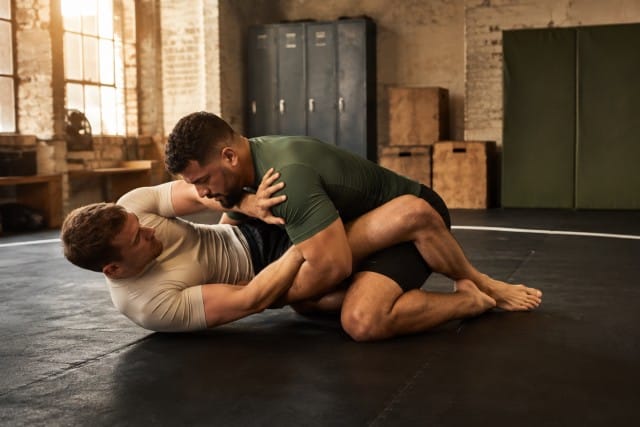
1. One-Arm Passing Drill
- Constraint: The Passer can only use one arm.
- Goal: Develop balance, posture, and hip pressure without relying on grips.
- Why it works: Forces better weight distribution and footwork.
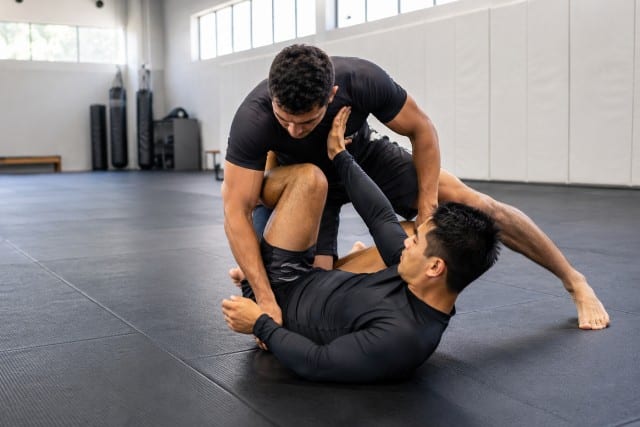
2. No-Grips Pass
- Constraint: Passer cannot grip with their hands—only use body positioning.
- Goal: Focuses on knee slices, stapling legs, and body pressure passes.
- Why it works: It builds instinctive pressure passing and forces guard passers to use their hips and shoulders more effectively.
3. Corner Zone Pass
- Constraint: Guard player is placed in a corner with limited movement space.
- Goal: Pressure-based passing in a confined area.
- Why it works: Eliminates excessive guard mobility and forces passer to control hips and pin efficiently.
4. Pass or Reset
- Constraint: If the passer disengages or is swept, restart in the guard.
- Goal: Encourages commitment to forward pressure and controlled passing sequences.
- Why it works: It builds a mindset of persistent engagement and discourages stalling or backing out.
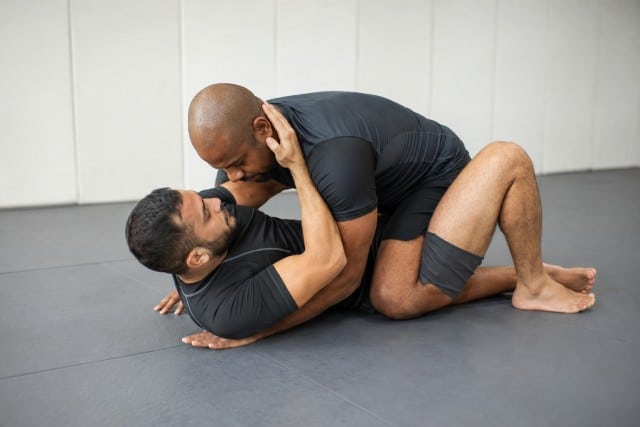
5. 30-Second Kill
- Constraint: The Pass must be completed in 30 seconds or less.
- Goal: Train urgency and tight transitions without panic.
- Why it works: Mimics competition pressure and forces efficient decision-making.
The Learning Science Behind It
CLGs align with the Ecological Dynamics approach to skill acquisition. This method emphasizes:
- Perception-action coupling: reacting based on what the opponent presents
- Adaptability: solving problems in different, ever-changing contexts
- Variability: developing robustness in techniques by experiencing a wide range of scenarios
This means you’re not just repeating movements—you’re training to make decisions, ultimately the essence of high-level Jiu-Jitsu.
How to Implement CLGs in Training
- Define your objective – Are you training smash passing? Leg pummeling? Knee-cut entries?
- Set constraints accordingly—match them to your focus (e.g., “no grips” to force angle-based passes).
- Rotate roles often – Let guard players develop retention while passers learn problem-solving.
- Use short rounds (30-90 seconds) – Increase intensity and engagement.
- Debrief briefly – Encourage athletes to reflect on what worked and what didn’t.
Final Thoughts
Constraint-led games aren’t just creative sparring; they’re a smart, science-backed way to accelerate learning. Limiting options and shaping the environment make practice more purposeful, responsive, and fun. When applied consistently, these games produce guard passers who are calm under pressure, technically fluid, and tactically sharp.
Want better guard passing? Don’t just drill. Game it. Get started here: Five ecological BJJ games to begin with
Related Reading
- Best Brazilian Jiu Jitsu Instructionals
The top BJJ videos to learn from - Why BJJ isn’t about Memorizing Moves
We dive deeper into how to learn BJJ