Toreando Pass for BJJ Beginners: Footwork, Grip Control, and 5 Common Counters
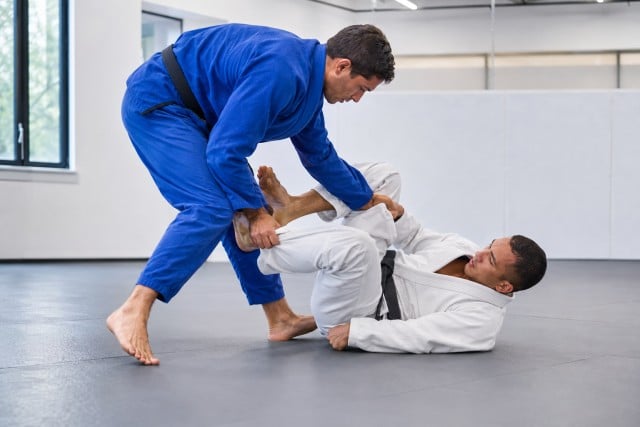
The toreando pass, sometimes spelled torreando pass, is one of the best guard passes for beginners to learn because it teaches timing, angle changes, and how to move around the legs instead of fighting straight through them. It is especially useful against seated guard, open guard, and loose supine guards where your opponent wants to frame, invert, or recover before you settle top control.
If you are still building your overall foundation, it helps to pair position-specific study like this with a broader roadmap on how to learn BJJ so you do not treat one pass like a complete passing system.
In this guide, you will learn what the toreando pass is, how to set it up, the footwork that makes it work, the most common mistakes, and the counters you should expect as soon as training partners realize what you are trying to do.
What Is the Toreando Pass in BJJ?
The toreando is a movement-based guard pass where you redirect the legs to one side, circle your feet, and beat the guard by getting your chest past the knees before your opponent can square back up. In gi training, this is often done with pant grips near the knees or ankles. In no-gi, the same idea still works, but you usually control the ankles, shins, or wrists while managing distance with your posture and head position.
The pass works best when you remember one simple idea: you are not trying to throw the legs away and pause. You are trying to move the legs aside while your body keeps traveling to the dominant angle.
Why the Toreando Pass Is Worth Learning Early
- It teaches real passing footwork instead of static pressure alone.
- It works in both gi and no-gi with a few grip changes.
- It combines naturally with knee cuts, leg drags, and body-lock follow-ups.
- It helps beginners understand how to pass by controlling hips and shoulders, not just legs.
- It gives you a reliable answer when an opponent keeps their guard loose and mobile.
The Basic Toreando Pass Step by Step
1. Start with posture and distance
Do not lean forward with your head low and your arms extended. Stay in a balanced stance with your hips under you. Your first job is to avoid giving your opponent easy collar ties, sleeve drags, or off-balances before the pass even starts.
2. Control the legs
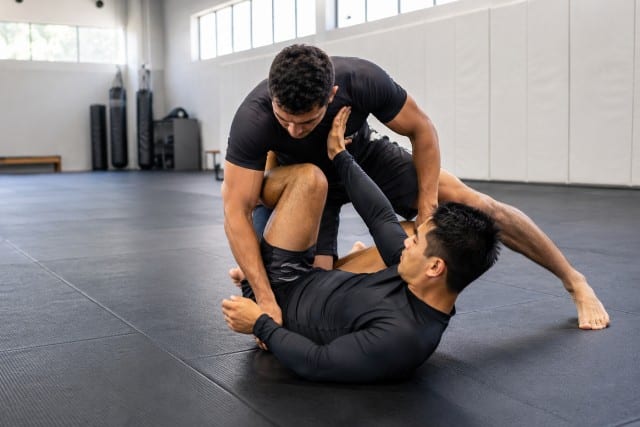
In gi, a common starting point is gripping both pant legs near the knees or one at the knee and one closer to the ankle. In no-gi, you can control both ankles or use a shin-and-ankle combination. The exact grip matters less than one key rule: do not let both knees point freely back at you.
3. Move the legs and your feet together
This is where most beginners make the pass harder than it needs to be. If you only shove the legs sideways but leave your feet in front of the guard, your opponent will recover. As you direct the legs to one side, circle your own feet to the other angle so your body is already traveling around the frame.
4. Aim your chest past the knees
Your goal is not “side control” yet. Your short-term goal is to win the race past the knees. Once your chest clears the line of the legs, the guard is much weaker and you can settle your control.
5. Pin the upper body before settling
As you come around, connect your shoulder to the torso and control the near-side upper body. If you beat the legs but ignore the shoulders, many opponents will turn into you, frame, or wrestle back up.
Three Timing Cues That Make the Pass Work Better
- Pass when your opponent is light on their hips. If they are mid-adjustment, seated up, or trying to re-pummel their legs, they are easier to redirect.
- Pass on the second movement. A small fake to one side often gets the guard player to react, which opens the real angle.
- Do not stop after the redirection. The toreando is usually won by continuous movement, not by one explosive shove.
Key Details Beginners Miss
Win with your feet, not just your hands
Good toreando passing feels fast because the feet keep circling. Many beginners think they need stronger grips when what they really need is sharper footwork.
Keep your elbows sensible
If your elbows flare wide while you push the legs, your posture becomes weak and you are easier to off-balance. Keep your arms active but connected.
Change levels as you arrive
You want to be mobile during the pass, but heavy once you clear the knees. Think “light while circling, heavy on arrival.”
Expect chains, not single-technique success
The toreando works even better when you treat it as one part of a passing game. That is the same reason it helps to build a complete BJJ game using online instructionals instead of collecting random techniques without a clear follow-up plan.
5 Common Toreando Counters and How to Deal With Them
1. The guard player squares their hips back in front of you
This is the classic recovery. It usually happens because you moved the legs but not yourself. The fix is to keep circling until your chest is clearly past the knees, then drop your weight and connect to the torso.
2. They stiff-arm your shoulder or collarbone
If you arrive upright and far away, the frame will stop you. Try lowering your level sooner and winning inside space with your shoulder as you come around. Do not run into the frame tall.
3. They invert under you
Loose guard players may spin underneath once they feel the redirection. If that happens, do not chase blindly. Pull your hips back a little, keep your posture, and redirect into a leg-drag style finish or reset the angle. Against good inverters, forcing the first toreando is often less effective than threatening it and passing on their recovery movement.
4. They sit up into wrestle-up pressure
This is common in no-gi. If your pass attempt leaves your head too far forward, your opponent may come up on a single leg or body lock. Keep your head position disciplined, and if they rise, use your grips to steer them back down before restarting the pass.
5. They recover to another guard instead of conceding the pass
This is normal. You may not land clean side control every time. Sometimes the toreando simply forces half guard, a leg drag, or a knee cut opening. That still counts as progress. Good passing is often about upgrading the position, not demanding a perfect finish from the first attempt.
Common Mistakes to Avoid
- Pushing the legs sideways and then pausing.
- Trying to pass while bent at the waist.
- Looking only at the legs and forgetting the upper body.
- Forcing the same direction every time.
- Treating the toreando like a grip battle instead of a movement battle.
Simple Toreando Drills That Actually Carry Over
One useful way to improve this pass is to isolate the race around the knees. Start with the guard player on their back, allow them to retain but not attack submissions, and give the passer one job: redirect the legs and clear the knee line. If you like training through live problems rather than dead reps, these kinds of games pair well with constraint-led games that build better guard passing.
You can also do short rounds where the passer may only use toreando-style movement for 30 to 60 seconds. That constraint teaches commitment, angle changes, and re-attack timing without letting you fall back on unrelated passing styles too early.
How to Study the Toreando Without Getting Overwhelmed
If you want extra material, keep the study narrow. Watch one coach, focus on one passing scenario, and test it for a few weeks. Beginners often progress faster when they use a small amount of structured study instead of jumping between fifteen passing clips in one night. If you need starting points, YourBJJGuide already has a roundup of free BJJ instructionals and YouTube channels for beginners that can help you study without turning your passing into information overload.
If you are paying for instructionals, choose one that matches your current level and the kind of passing you actually want to build. This is where a guide on how to choose the right BJJ instructional for your game can save you from buying content that looks impressive but does not fit your needs.
Final Thoughts
The toreando pass is one of the cleanest ways to learn that guard passing is really about angle, timing, and control of the hips and shoulders. For beginners, that makes it more than just a technique. It is a doorway into understanding how passing works.
Start simple. Control the legs, move your feet with intention, beat the knee line, and settle heavy once you arrive. If you build that sequence patiently, the toreando can become one of the most reliable movement passes in your game.